
What Size Portable Power Station Do You Need for a CPAP Machine?
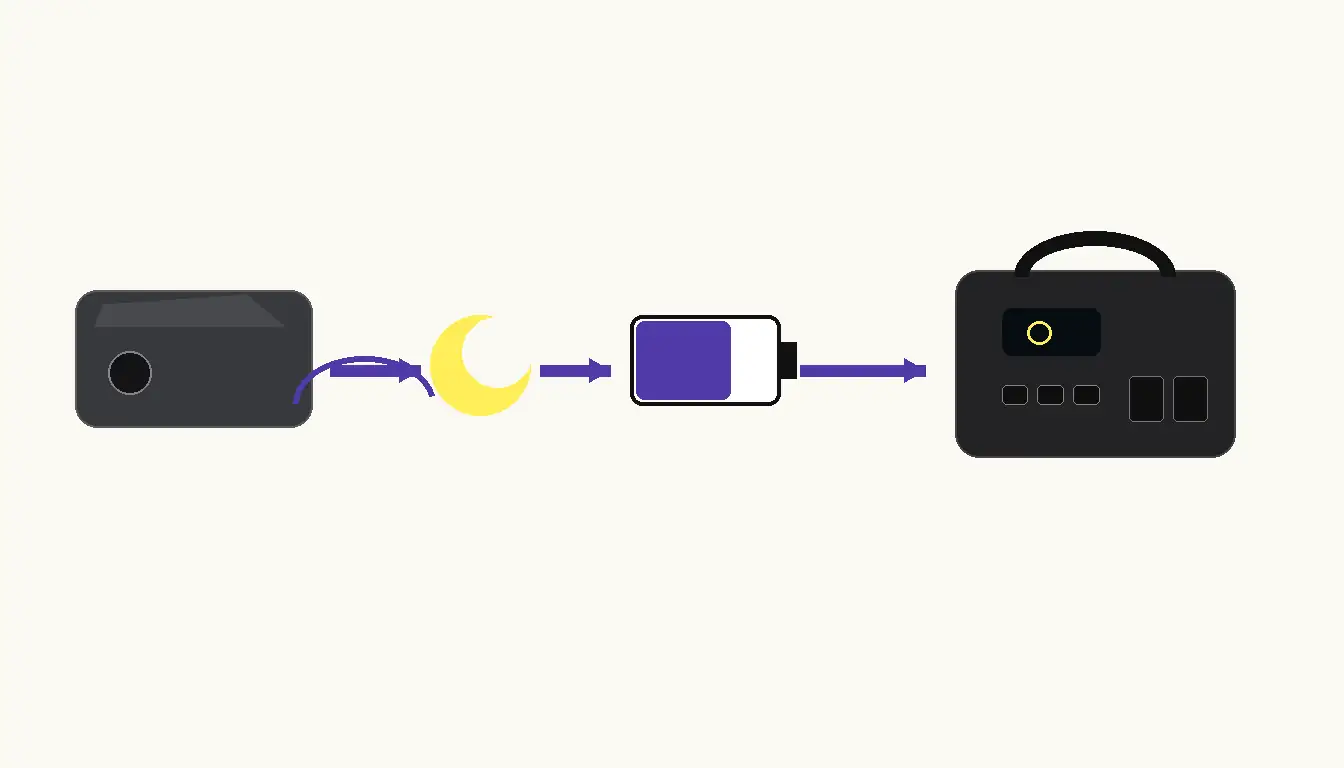
A portable power station for a CPAP machine should be sized primarily by how many watt-hours the exact CPAP setup uses during one night, not by the CPAP power adapter's maximum wattage alone.
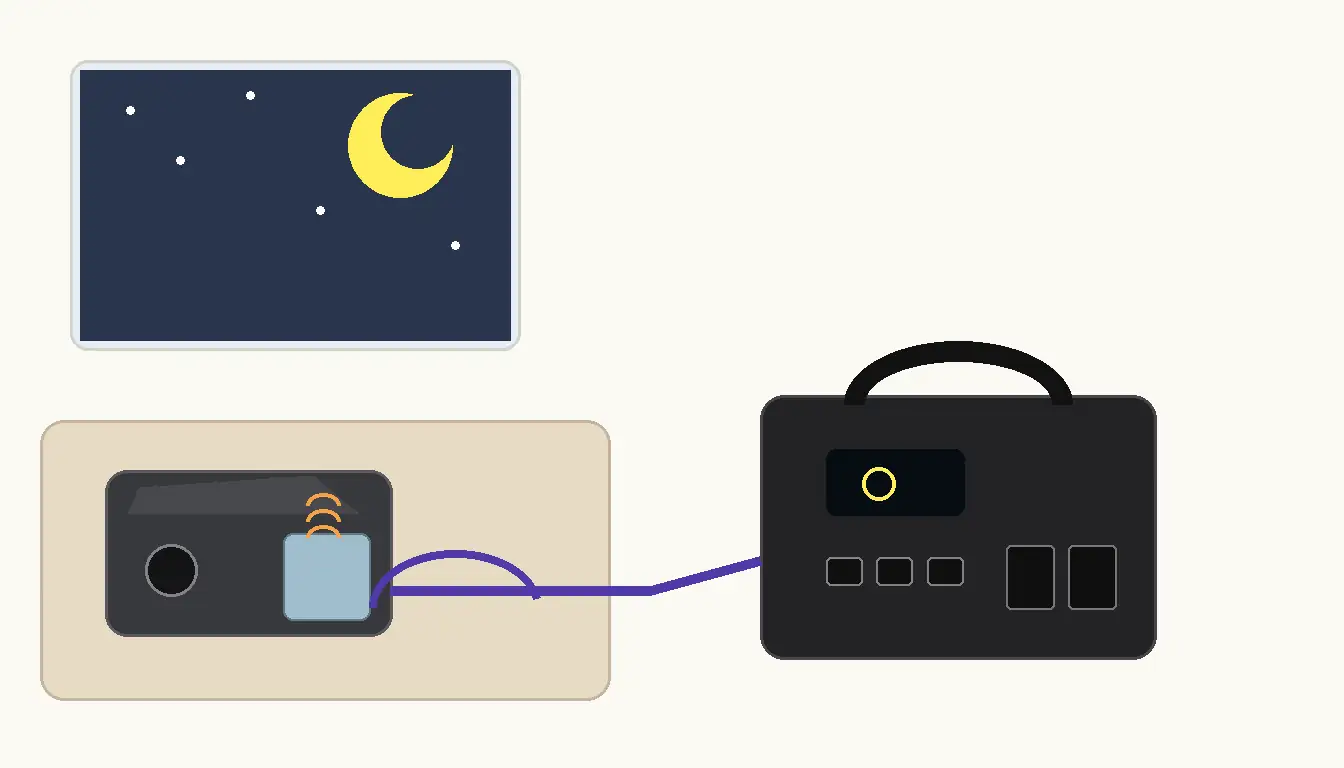
Size CPAP backup from energy per night—not adapter wattage alone
For many CPAP-only setups without heated humidification, a 200–300Wh portable power station can be a reasonable one-night starting class. If you use an integrated heated humidifier and heated tubing, 500Wh or more can be a more appropriate starting point, and multi-night backup can move the requirement toward 500–1,000Wh or beyond.
Those are planning ranges—not universal CPAP requirements.
Actual consumption varies with:
- exact CPAP model;
- prescribed pressure;
- APAP pressure changes during the night;
- heated humidifier setting;
- heated tube setting;
- hours of therapy;
- AC inverter overhead;
- direct DC versus AC operation;
- portable power station usable capacity.
Official ResMed data illustrate how large that variation can be. In ResMed's AirSense 10 battery guide, an AirSense 10 using SlimLine tubing at 10 cm H₂O is listed at 0.93A from a 12V source, while the same family with humidification and heated-tubing configurations can require several times that current.
That makes the core sizing relationship:
CPAP energy per night
× number of nights
→ required usable battery energy
and separately:
CPAP electrical input requirement
→ required power station output capability.
For CPAP backup, the energy calculation is usually more important than buying a station with an enormous AC inverter.
Quick Answer: What Size Portable Power Station for a CPAP?
A useful planning framework is:
| CPAP setup | Starting PPS capacity class | Why |
|---|---|---|
| Low-power travel CPAP | 100–200Wh | Some travel CPAPs consume very little power |
| Bedside CPAP without heated humidity | 200–300Wh | Often enough for one night with reasonable margin |
| CPAP with humidifier | 300–500Wh+ | Humidification can substantially increase nightly Wh |
| CPAP with heated humidifier + heated tube | 500–700Wh+ | Heating can dominate energy consumption |
| Two or more nights | 500–1,000Wh+ | Multiply actual nightly Wh by required nights |
| CPAP + other outage loads | Calculate combined Wh | Router, lights, phone and other loads consume additional energy |
These are category-level planning ranges, not guarantees.
The safest sizing method is:
exact CPAP
→ exact operating configuration
→ nightly Wh
→ required nights
→ power-station usable Wh
→ planning margin.
Start With the Exact CPAP Model
Do not size from the word:
CPAP
alone.
A compact travel machine and a bedside CPAP with:
- heated water humidifier;
- heated tubing
can have dramatically different electrical requirements.
For example, ResMed specifies typical power consumption of just 6.3W for its AirMini travel CPAP, with 27W peak consumption, while its AirSense 11 system ships with a 65W power supply and can operate with a heated humidifier and ClimateLineAir heated tube.
Those two devices should not automatically receive the same battery-size recommendation.
CPAP Sizing Has Two Separate Requirements
Portable power station sizing requires both:
- enough power;
- enough energy.
Output Power Determines Whether the CPAP Can Operate
A portable power station needs an output compatible with the CPAP's approved power supply.
For AC operation, confirm:
- AC voltage;
- CPAP power adapter requirement;
- power station AC output.
A CPAP generally does not require the enormous inverter outputs needed by:
- microwaves;
- power tools;
- space heaters.
For example, ResMed's current AirSense 11 documentation identifies a 65W AC adapter.
However:
A 65W power adapter does not mean the CPAP continuously consumes 65W all night.
The adapter's rating describes its supported electrical capacity.
Nightly battery sizing should use actual or model-specific energy consumption whenever possible.
Battery Watt-Hours Determine Runtime
Battery capacity answers:
How many hours or nights can the CPAP operate?
If a CPAP setup uses:
100Wh per night
then:
- 1 night ≈ 100Wh delivered;
- 2 nights ≈ 200Wh;
- 3 nights ≈ 300Wh
before allowing for:
- power-station conversion losses;
- inverter idle consumption;
- battery reserve;
- planning margin.
That is why watt-hours usually matter more than inverter watts when comparing CPAP backup stations.
How Much Power Does a CPAP Machine Use?
There is no single CPAP wattage.
Power consumption depends on:
- machine design;
- therapy pressure;
- airflow;
- mask leak;
- humidification;
- tube heating;
- environmental conditions.
Official ResMed documentation provides useful examples of just how wide the range can be.
AirSense 11 Example: Do Not Confuse the Adapter Rating With Average Consumption
The current AirSense 11 system includes a:
65W AC power supply.
ResMed's May 2026 accessory guide also lists the current Air11 65W power supply and a dedicated Air11 DC/DC converter.
That tells us:
- what power supply the system is designed around;
- that manufacturer-supported DC operation exists.
It does not establish:
65W × 8 hours = actual nightly consumption.
A CPAP does not necessarily draw the adapter's maximum rating continuously.
AirSense 10 Example: Pressure and Comfort Features Change Energy Use
ResMed's official battery guide provides more detailed 12V battery-current data for the AirSense 10 family.
At a therapy pressure of:
10 cm H₂O
the guide lists approximately:
- 0.93A at 12V with SlimLine tubing;
- 2.30A at 12V with humidifier set to 4;
- 3.77A at 12V with ClimateLineAir and humidifier on Auto.
Converted to approximate input power:
0.93A × 12V ≈ 11.2W
2.30A × 12V ≈ 27.6W
3.77A × 12V ≈ 45.2W
That means an eight-hour session would correspond approximately to:
- 89Wh in the first example;
- 221Wh in the second;
- 362Wh in the third
before adding a separate portable-power-station margin.
These calculations are derived from ResMed's model-specific 12V battery-current table. They are not universal CPAP consumption values.
ResMed's Own Battery Sizing Includes Margin
For those same AirSense 10 examples, ResMed's guide specifies battery sizes for eight hours that already include a 50% safety margin.
At 10 cm H₂O, it lists approximately:
- 12Ah battery requirement with SlimLine;
- 28Ah with humidifier at level 4;
- 46Ah with ClimateLineAir and humidifier Auto.
At 12V, those nominal battery sizes correspond to:
- 144Wh;
- 336Wh;
- 552Wh.
That strongly supports an important sizing conclusion:
Humidification and tube heating can move the same CPAP from a relatively small battery requirement into a much larger one.
Travel CPAP Example: ResMed AirMini
ResMed specifies for the AirMini:
- 6.3W typical power consumption;
- 27W peak power consumption;
- 1W standby;
- 20W power supply.
Using the typical power figure purely as an illustrative calculation:
6.3W × 8 hours ≈ 50Wh
That explains why some travel CPAP setups can operate from much smaller batteries than heated bedside systems.
Again:
typical consumption is not a guaranteed nightly value for every user or therapy setting.
Humidifiers and Heated Tubes Can Dominate CPAP Battery Use
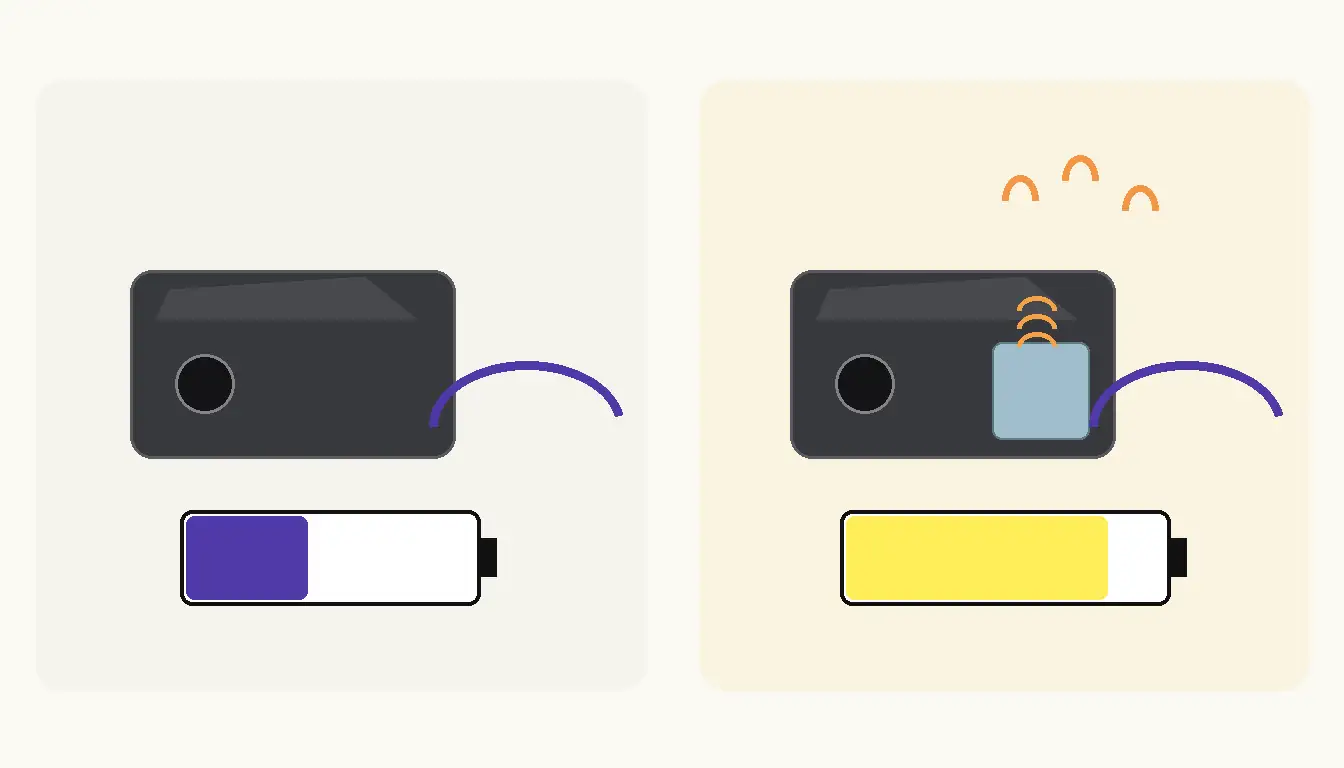
Heating requires energy.
A CPAP's blower may need relatively modest electrical power, while:
- heating water;
- heating tubing
can substantially increase consumption.
Why the Humidifier Changes Battery Size
The AirSense 10 example demonstrates the effect clearly.
At 10 cm H₂O:
SlimLine only
≈ 0.93A at 12V.
With:
humidifier setting 4
≈ 2.30A.
That is more than twice the source current in ResMed's test conditions.
The difference becomes even larger at stronger humidifier/heated-tube settings.
Heated Tubing Adds Another Electrical Load
Heated tubing is designed to help maintain:
- temperature;
- humidity
through the air circuit.
But the heater itself requires electricity.
ResMed's AirSense 10 battery guide shows materially higher battery-current requirements for several ClimateLineAir configurations compared with SlimLine tubing alone.
For backup-power planning, therefore record:
- humidifier on/off;
- humidity setting;
- heated tube on/off;
- heated tube temperature.
Should You Turn Humidification Off to Save Battery?
Reducing supported heating features can substantially reduce battery consumption on some systems.
But this is a therapy-device configuration question, not simply an electrical optimization.
Do not change:
- prescribed treatment pressure;
- prescribed therapy mode
to save battery.
If you are considering changing comfort features such as humidification or heated tubing specifically for emergency battery use, follow the CPAP manufacturer's instructions and discuss the backup configuration with your equipment supplier or healthcare professional when appropriate.
FDA advises users of home medical devices that require electricity to know what power sources are compatible with their device and to read the manufacturer's instructions or contact the manufacturer/distributor about battery or generator operation.
How to Find Your CPAP's Actual Nightly Energy Requirement
The best CPAP sizing data come from the exact device and configuration.
Method 1: Use Manufacturer Battery Guidance
This is especially valuable when the manufacturer publishes tables covering:
- pressure;
- humidifier;
- heated tubing;
- hours of operation.
ResMed's AirSense 10 battery guide is a good example because it separates multiple configurations rather than publishing one generic CPAP wattage.
Manufacturer battery guidance should normally outrank a generic online statement such as:
“CPAPs use 30–60W.”
Method 2: Measure Overnight Energy
For AC-powered use, an appropriately rated plug-in energy meter can measure:
watt-hours or kWh used overnight.
A useful test is:
- use the CPAP in its normal prescribed configuration;
- begin with the meter reset;
- use it for a normal night;
- record total Wh;
- repeat for several nights.
A multi-night average is stronger than measuring a few minutes of instantaneous wattage.
Method 3: Use Manufacturer Current Draw
If the manufacturer gives:
- voltage;
- current
for the exact battery configuration, calculate:
Watts = volts × amps
Then:
Wh = watts × hours
This is the basis of the AirSense 10 examples above.
Do Not Use the Power Adapter Rating as Your Only Runtime Number
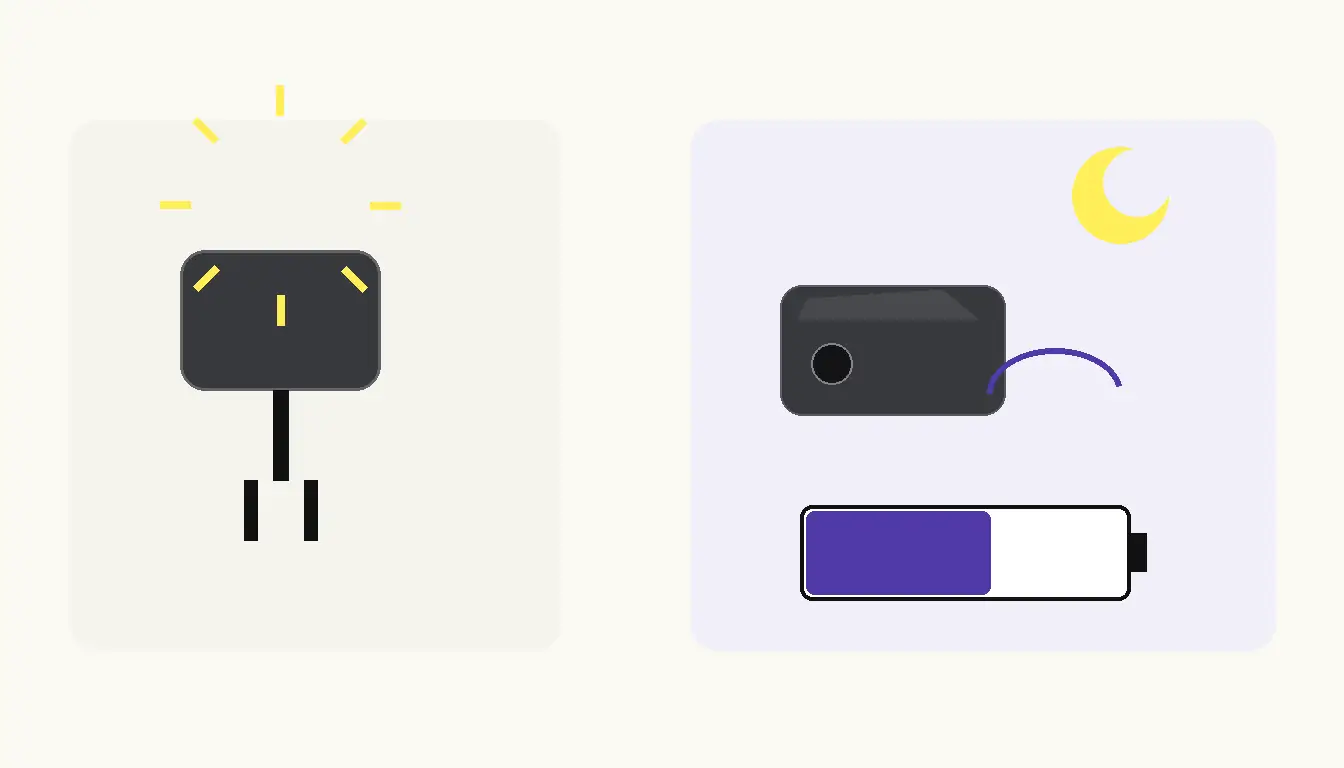
Suppose a CPAP has a:
65W adapter.
Calculating:
65W × 8h = 520Wh
assumes the device draws its adapter's maximum rated output continuously for eight hours.
That may substantially overstate actual consumption.
The power-supply rating is useful for:
output compatibility.
It is not automatically the correct:
overnight energy consumption.
How to Calculate the Portable Power Station Size
The basic calculation is straightforward once you know nightly energy use.
Core Formula
Required CPAP energy = nightly CPAP Wh × number of nights
Then:
Required PPS rated Wh ≈ required CPAP Wh ÷ expected usable fraction
Then optionally:
Planning target = required PPS Wh × chosen margin factor
Use:
- measured usable AC capacity;
- measured usable DC capacity
when available.
Do not assume every station has the same efficiency.
AC Operation Requires Additional Conversion
If the CPAP is plugged into the power station's AC outlet, the energy path can be:
PPS battery DC
→ AC inverter
→ CPAP AC power adapter
→ CPAP DC electronics.
The AC inverter also may consume some power merely by remaining enabled.
This can matter greatly with a low-power CPAP load.
Direct DC Can Reduce Conversion Stages
With a manufacturer-supported DC setup, the path may instead be:
PPS DC output
→ approved DC/DC converter
→ CPAP.
ResMed currently sells DC/DC converter solutions for several systems. Its AirSense 10 converter is designed to provide 24V/90W from a compatible 12V or 24V DC source, while current AirSense 11 accessory documentation also lists an Air11 DC/DC converter.
Direct DC can avoid operating the PPS AC inverter.
But use:
- exact manufacturer-supported converter;
- correct voltage;
- sufficient current.
Do not attach a generic DC barrel connector simply because it physically fits.
Worked CPAP Sizing Examples
Example 1 — 90Wh per Night, One Night
Measured CPAP energy:
90Wh/night
One night:
90Wh
Assume the chosen station provides:
85% usable energy through the selected output path.
Required nominal capacity:
90 ÷ 0.85 ≈ 106Wh
Add an explicit:
25% planning margin
106 × 1.25 ≈ 133Wh
A:
150–200Wh-class
station could satisfy this illustrative requirement.
Because AC inverter idle consumption can matter at very low loads, moving to roughly:
200Wh+
may provide more practical margin.
The 85% and 25% figures are assumptions for this example only.
Example 2 — 150Wh per Night, Two Nights
Nightly energy:
150Wh
Two nights:
300Wh
Assumed usable fraction:
85%
300 ÷ 0.85 ≈ 353Wh
20% planning margin:
353 × 1.20 ≈ 424Wh
This points toward roughly:
500Wh-class capacity.
Example 3 — 220Wh per Night With Humidification
Nightly requirement:
220Wh
One night.
Assume:
85% usable
220 ÷ 0.85 ≈ 259Wh
20% margin:
≈311Wh
A:
300–500Wh-class
station would provide a more appropriate planning range than a tiny 100Wh battery.
Example 4 — 360Wh Heated Setup for Two Nights
Nightly energy:
360Wh
Two nights:
720Wh
Assume:
85% usable
720 ÷ 0.85 ≈ 847Wh
Add 15% margin:
≈974Wh
That moves the requirement into approximately:
1kWh-class storage.
This is why heated humidity can completely change CPAP backup sizing.
Example 5 — Low-Power Travel CPAP
Suppose actual consumption:
55Wh/night.
Three nights:
165Wh
Assume:
90% usable through an efficient supported DC path
165 ÷ 0.90 ≈ 183Wh
20% planning margin:
≈220Wh
A roughly:
250–300Wh
station could potentially provide several nights in this illustrative low-power configuration.
How Much Battery Do You Need for Multiple Nights?
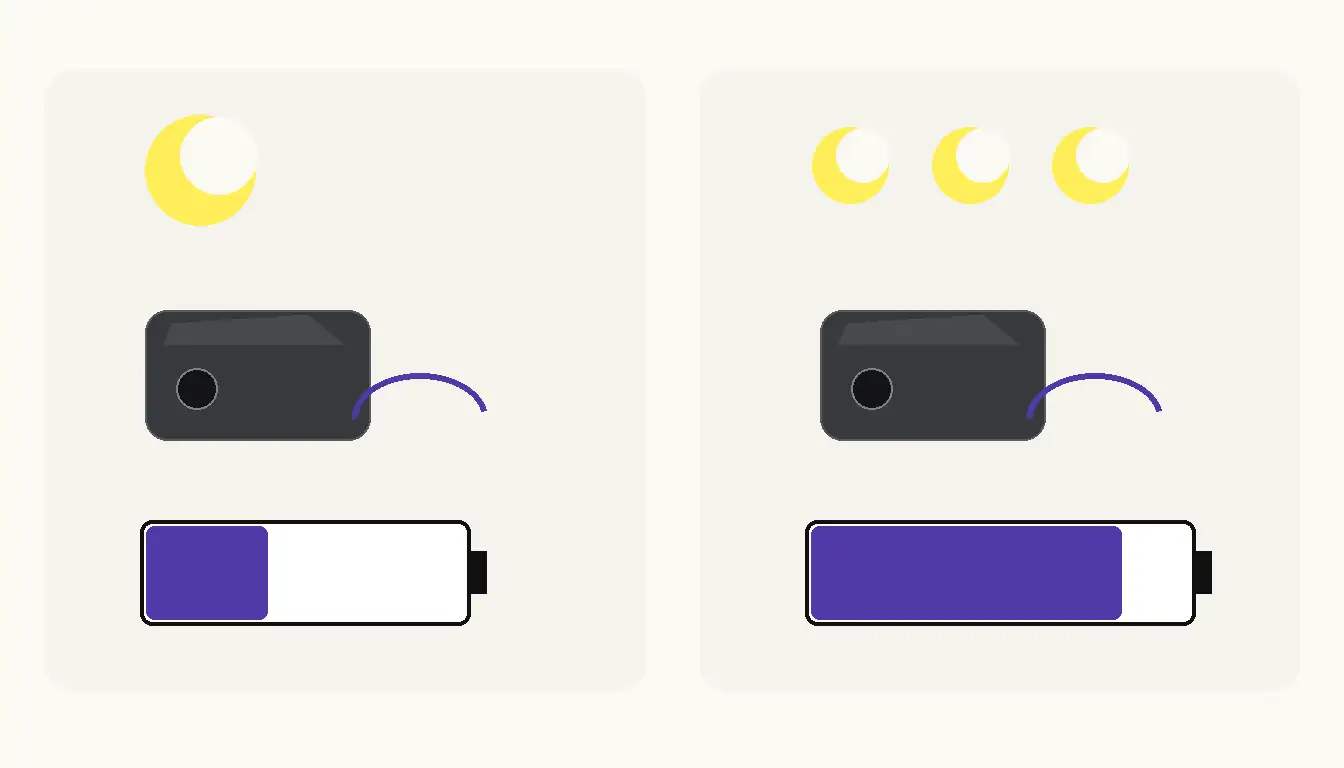
Once nightly Wh is known:
multiply it.
Multi-Night CPAP Examples
| CPAP nightly energy | 1 night | 2 nights | 3 nights | 5 nights |
|---|---|---|---|---|
| 50Wh | 50Wh | 100Wh | 150Wh | 250Wh |
| 100Wh | 100Wh | 200Wh | 300Wh | 500Wh |
| 200Wh | 200Wh | 400Wh | 600Wh | 1,000Wh |
| 300Wh | 300Wh | 600Wh | 900Wh | 1,500Wh |
| 400Wh | 400Wh | 800Wh | 1,200Wh | 2,000Wh |
These figures are CPAP-side energy only.
You still need to allow for:
- PPS losses;
- inverter overhead;
- battery reserve;
- margin.
Three Nights Can Mean 300Wh—or More Than 1kWh
Consider two users.
User A:
100Wh/night
Three nights:
300Wh.
User B:
360Wh/night
Three nights:
1,080Wh.
Both use a CPAP.
Their battery requirement differs by more than:
3×.
That is why “best size for CPAP” cannot be one fixed watt-hour number.
AC vs DC: Which Is Better for CPAP Backup?
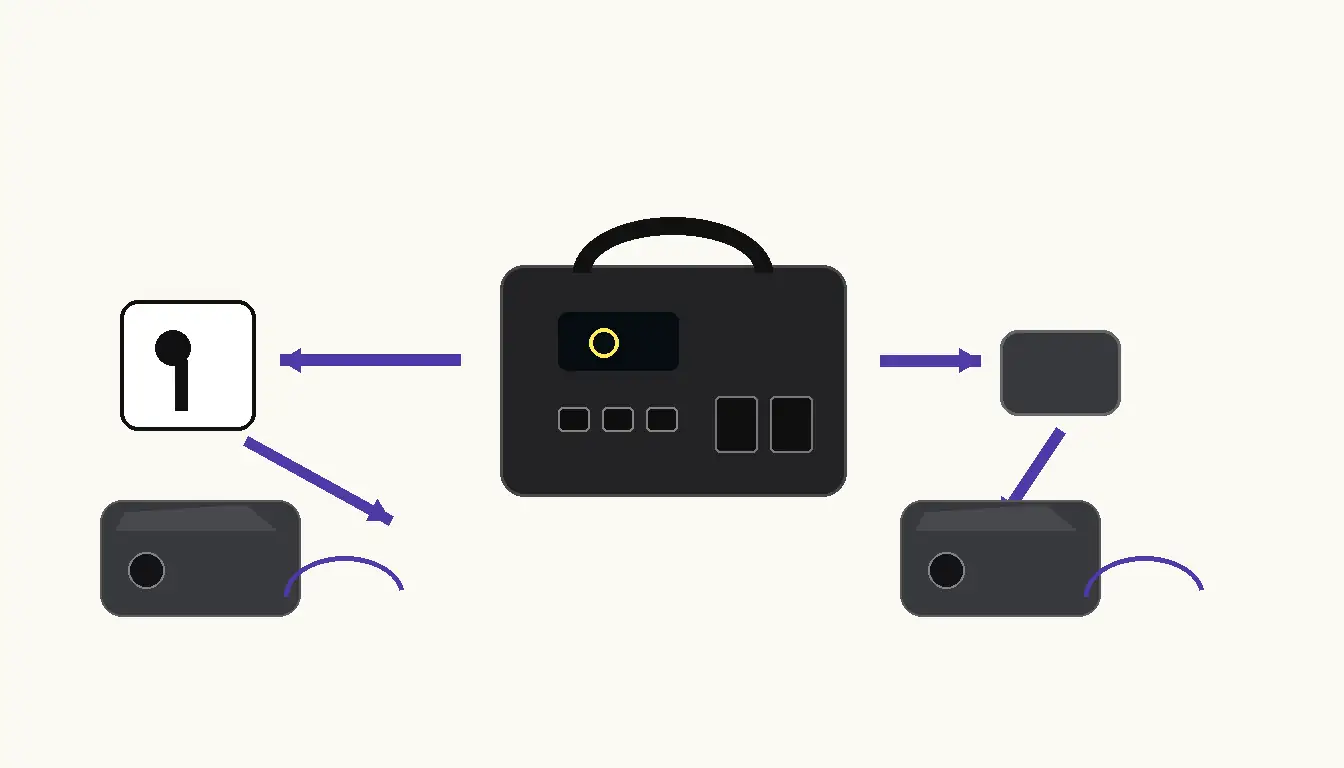
Both can work if supported by the equipment.
AC Is the Simplest Universal Setup
Typical setup:
PPS AC outlet
→ original CPAP wall adapter
→ CPAP.
Advantages:
- simple;
- uses original power supply;
- easy to understand.
Disadvantages:
- inverter losses;
- inverter idle consumption;
- more conversion stages.
For a CPAP drawing only:
10–30W
an inverter that itself consumes several watts can materially reduce runtime.
Manufacturer-Supported DC Can Be More Efficient
Where available, direct DC can reduce conversion losses.
ResMed currently offers official DC/DC power options for AirSense 10, AirSense 11 and AirMini product families.
The important word is:
supported.
Do not use an arbitrary automotive/USB adapter unless:
- correct voltage;
- polarity;
- current;
- device compatibility
are established.
USB-C Is Not Automatically CPAP-Compatible
A portable power station may have a:
100W or 140W USB-C port.
That does not mean the CPAP can be powered directly from USB-C.
The CPAP must explicitly support:
- USB-C PD input;
or use a manufacturer-approved converter designed for it.
Connector wattage alone does not prove compatibility.
How Big Does the AC Inverter Need to Be?
For many CPAP setups, inverter capacity is not the difficult part.
For example:
- AirSense 11 uses a 65W PSU;
- AirMini uses a 20W supply;
- AirSense 10 uses a 90W power supply architecture.
A portable power station with several hundred watts of AC output therefore often has ample output headroom for one CPAP.
But verify the exact machine.
A 1,000W Inverter Does Not Give More CPAP Runtime Than a 300W Inverter
Runtime depends mainly on:
battery Wh + efficiency.
Example:
Station A:
- 300W inverter;
- 500Wh battery.
Station B:
- 1,500W inverter;
- 300Wh battery.
If both efficiently power the CPAP:
Station A may run it longer despite having the much smaller inverter.
For CPAP selection:
Do not overpay for enormous output you do not need while ignoring usable battery capacity and idle draw.
Low-Load Inverter Consumption Matters More for CPAP Than for Many Appliances
A CPAP is often a relatively low-power AC load.
Suppose:
CPAP average:
15W
PPS AC inverter overhead:
10W.
Total effective battery demand becomes approximately:
25W.
Inverter overhead would represent a very large share of the total.
This is different from running a:
1,500W heater
where an additional 10W is proportionally trivial.
Why This Changes Product Selection
For the later commercial page:
Best Portable Power Stations for CPAP Backup
we should prioritize:
- low AC idle consumption;
- DC output efficiency;
- ability to disable unnecessary outputs;
- overnight reliability
instead of ranking products mainly by:
maximum inverter watts.
CPAP Humidifier Settings Can Change the Recommendation
A user who normally runs:
- no heated humidity
may require only a fraction of the battery capacity needed by someone using:
- heated humidifier;
- ClimateLine/heated tubing;
- higher comfort settings.
Model-Specific Example
At 10 cm H₂O, ResMed's AirSense 10 battery table lists:
| Configuration | 12V current | Approx. power | Approx. 8h energy from source |
|---|---|---|---|
| SlimLine | 0.93A | ~11.2W | ~89Wh |
| Humidifier level 4 | 2.30A | ~27.6W | ~221Wh |
| ClimateLine + humidifier Auto | 3.77A | ~45.2W | ~362Wh |
Derived from ResMed's official battery-current figures.
Those examples show why the question:
“How many watts does a CPAP use?”
is incomplete.
The real question is:
Which CPAP, at which settings, for how many hours?
What About APAP and BiPAP Machines?
Do not assume every positive-airway-pressure device consumes the same power.
Different machines can have different:
- power supplies;
- pressure behavior;
- humidification systems;
- electrical requirements.
An APAP device can also vary delivered pressure during sleep.
A bilevel device may use a different power supply than a standard CPAP.
For example, ResMed's 2026 Air11 accessories guide lists a 65W PSU for AirSense 11-series devices but a 90W PSU for AirCurve 11-series devices.
That difference is enough to justify exact-model sizing.
Do not apply AirSense CPAP consumption directly to:
- AirCurve;
- another bilevel system;
- ventilatory-support equipment.
CPAP Backup During a Power Outage
Because CPAP is a medical device, backup planning needs more care than ordinary appliance backup.
FDA advises users of electricity-dependent home medical devices to:
- understand backup-power options;
- read the device instructions;
- contact the manufacturer or distributor regarding battery/generator use;
- keep an emergency backup plan.
Do Not Treat Any Portable Power Station as Automatically “Medical Grade”
A consumer portable power station having:
- AC output;
- UPS mode
does not automatically establish that it is:
- certified as a medical-device UPS;
- suitable for every health circumstance.
The CPAP manufacturer remains the authority on compatible power sources.
UPS/EPS Can Improve Convenience, but Verify the Device
Some portable power stations can remain plugged into utility AC and transfer to battery after a blackout.
That can reduce the risk of waking up to manually reconnect the CPAP.
But:
- transfer time varies;
- bypass behavior varies;
- consumer UPS/EPS classification varies.
Do not guarantee uninterrupted CPAP therapy based simply on:
“UPS supported.”
Have a Backup Plan Beyond One Battery
FDA recommends that users of home medical devices understand what to do if:
- power fails;
- the device fails;
- the backup source is unavailable.
For CPAP outage planning, that can mean documenting:
- equipment supplier contact;
- manufacturer support;
- charging options;
- backup location with electricity;
- battery state before severe weather.
Can You Recharge the Power Station During the Day?
Yes, and this can dramatically reduce the battery capacity required for multi-night backup.
Suppose:
CPAP uses:
200Wh/night.
Three-night outage:
600Wh total CPAP energy.
Without charging:
you need enough battery for all three nights.
If solar or another source restores:
200Wh+ every day,
the battery only needs enough capacity to:
- bridge nights;
- tolerate variable recharge.
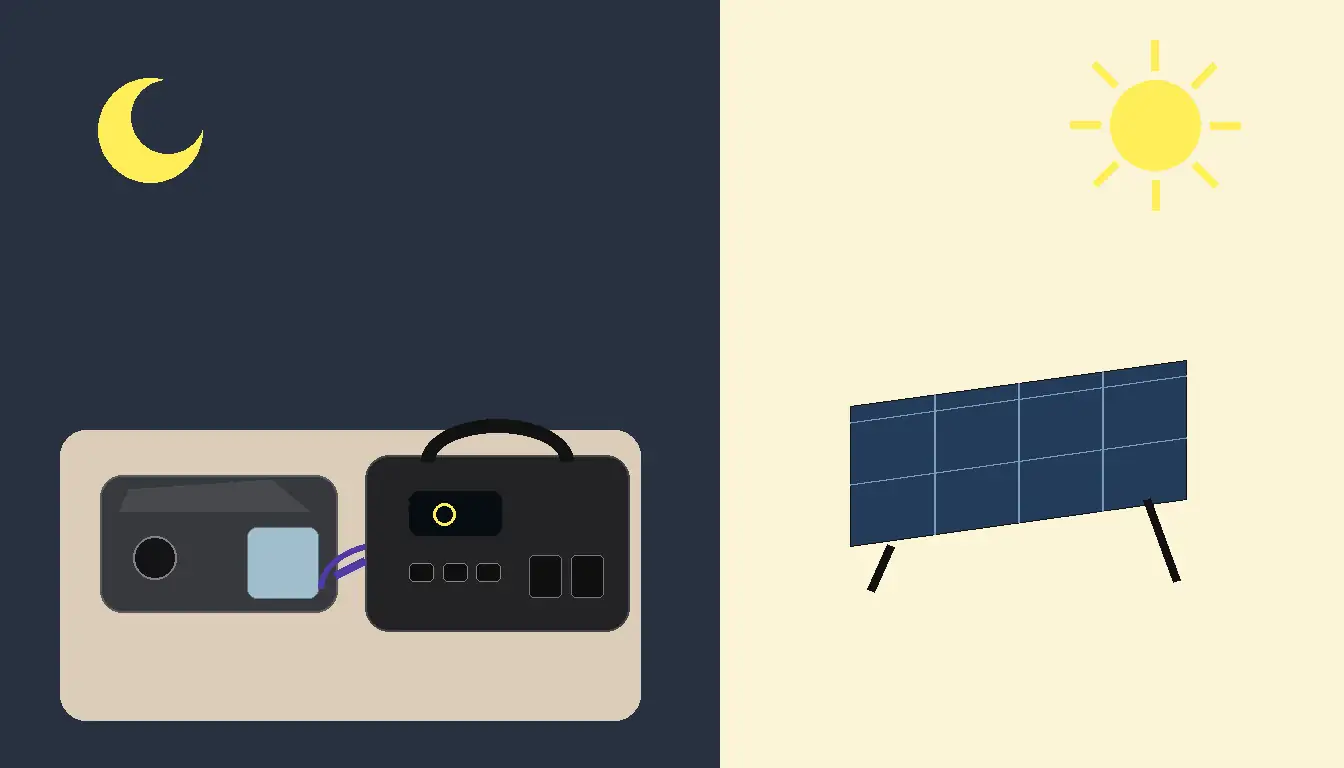
Solar Backup for CPAP
Solar can be useful because CPAP is usually used primarily at night while solar energy is collected during daylight.
A simple energy cycle can be:
daytime solar
→ recharge PPS;
night
→ CPAP uses battery;
next day
→ recharge again.
The key calculation is:
daily solar Wh received by PPS ≥ nightly CPAP Wh + system losses
—not merely:
solar panel watts > CPAP watts.
Do Not Depend on Perfect Solar Weather
For medical-device backup, solar should not be planned as though every day will provide:
- clear sky;
- full rated panel output.
Clouds and storms are often the same events that create power outages.
Maintain enough battery margin for:
- poor solar days;
- delayed recharge.
CPAP Plus Other Outage Loads
A battery purchased “for CPAP” often ends up powering more than the CPAP.
Common additions include:
- phone;
- router;
- lamp;
- fan.
These can materially change the battery requirement.
CPAP + Phone Example
CPAP:
150Wh/night
Phone:
15Wh
Total:
165Wh
The increase is modest.
CPAP + Router Example
CPAP:
150Wh/night
Router/modem:
20W × 8h = 160Wh
Combined:
310Wh overnight
before PPS losses.
The networking equipment can consume as much energy as the CPAP.
CPAP + Fan Example
CPAP:
150Wh
Fan:
35W × 8h = 280Wh
Combined:
430Wh
Now a:
300Wh-class battery
may be far too small.
Do Not Add High-Power Appliances Casually
A CPAP may need only a few hundred Wh per night.
A:
1,500W heater
running for one hour can consume:
1,500Wh.
High-power heating/cooking loads can consume several nights of CPAP battery energy very quickly.
What Size Power Station for One Night?
The answer depends on measured nightly Wh.
Low-Power Setup
Nightly use:
50–100Wh
A:
150–300Wh
station can provide practical margin.
Moderate Bedside Setup
Nightly use:
100–200Wh
A:
300–500Wh
station is a stronger starting category.
Heated Humidification Setup
Nightly use:
250–400Wh
A:
500–700Wh+
station can provide more appropriate margin.
These are planning categories, not exact prescriptions.
What Size for Two Nights?
Double actual nightly consumption.
Example:
150Wh/night × 2 = 300Wh delivered
With PPS losses and reserve:
approximately:
400–500Wh-class storage
can become more appropriate.
For a:
350Wh/night heated setup:
700Wh
is required at the device before PPS adjustment.
That can push the target toward:
1kWh.
What Size for Three Nights?
Example A:
100Wh/night
→ 300Wh CPAP energy.
Example B:
300Wh/night
→ 900Wh CPAP energy.
The first might fit a:
500Wh-class PPS.
The second can require:
1kWh+.
Again, exact usable battery capacity determines the final answer.
Is a 300Wh Power Station Enough for CPAP?
Potentially.
It can be a good match for:
- a low-power CPAP;
- one night;
- minimal/no heated humidity.
It can be insufficient for:
- heated humidifier;
- heated tubing;
- multiple nights;
- CPAP + fan/router.
Calculate actual Wh.
Is a 500Wh Power Station Enough?
For many one-night CPAP setups, 500Wh provides useful margin.
It may also support:
- two or more nights
when actual nightly consumption is low.
But a high-consumption heated configuration can use a large share of 500Wh in one night.
Is a 1,000Wh Power Station Too Large for CPAP?
Not necessarily.
A 1kWh station makes sense when:
- multiple nights are required;
- heated humidity is used;
- other essential loads share the battery;
- solar/grid recharge is uncertain.
For a low-power travel CPAP requiring around 50Wh/night, however, a 1kWh unit may be unnecessary:
- weight;
- expense;
- size.
CPAP Portable Power Station Sizing Checklist
CPAP
- Exact brand and model identified
- Power supply rating recorded
- Manufacturer battery/DC guidance checked
- Therapy configuration known
- Humidifier status known
- Heated tubing status known
- Normal nightly therapy hours known
- Nightly Wh measured or calculated
Backup Requirement
- Number of nights defined
- Other loads listed
- AC or approved DC operation chosen
- Recharge opportunities identified
- Poor-weather margin included
Portable Power Station
- Output electrically compatible
- Enough usable Wh
- Low-load inverter consumption considered
- DC output compatible if used
- AC output can stay enabled all night
- ECO timeout checked
- Current safety/recall status checked
Emergency Planning
- CPAP manufacturer's backup instructions available
- Supplier/manufacturer contact available
- Battery charged before outage
- Alternative charging plan available
- No unapproved therapy-setting changes used just to save energy
Common CPAP Power-Station Sizing Mistakes
Using the Power Adapter's Maximum Wattage as Average Consumption
A 65W supply does not mean:
65W continuously all night.
Ignoring the Humidifier
Humidification can substantially increase energy consumption.
Ignoring Heated Tubing
Heated tubing is another electrical load.
Buying by Inverter Watts Instead of Battery Wh
A 1,500W inverter does not create long runtime if the battery is small.
Ignoring Inverter Idle Consumption
This can be significant compared with a low-power CPAP.
Assuming Every CPAP Uses 30W
Exact machine and settings matter.
Assuming Travel CPAP Consumption Represents Bedside CPAP
Travel systems can be far lower power.
Using Generic DC Adapters
Use exact supported power hardware.
Assuming USB-C Automatically Works
The CPAP must support it.
Changing Therapy Pressure to Save Battery
Do not alter prescribed treatment settings for energy savings.
Assuming UPS Means Medical-Grade Backup
Consumer PPS transfer functions and certification vary.
Forgetting Other Overnight Loads
A fan or router can consume as much—or more—energy than the CPAP.
Planning Solar From Panel Wattage Alone
Daily solar energy matters, not panel nameplate watts alone.
Frequently Asked Questions
What Size Portable Power Station Do I Need for a CPAP?
For many one-night CPAP setups, roughly 200–500Wh is a useful starting range, with lower-power systems potentially needing less and heated humidification systems potentially needing more. Calculate from the exact machine's nightly Wh.
Is a 300Wh Power Station Enough for a CPAP?
It can be for many low- or moderate-power one-night configurations, especially without heated humidity. Verify actual consumption.
Is 500Wh Enough?
Often for one night with substantial margin and potentially several nights for efficient setups. Heated humidification can reduce that runtime considerably.
Is 1,000Wh Enough for Multiple Nights?
Often, but exact runtime depends on nightly consumption. A 100Wh/night setup and a 350Wh/night setup produce very different results.
How Many Watts Does a CPAP Use?
There is no universal number. ResMed's official AirSense 10 battery data show current draw changing substantially with therapy pressure, humidification and heated tubing.
Does a CPAP Humidifier Use More Battery?
Yes. ResMed's battery data demonstrate substantially higher current draw when humidification and heated tubing are active.
Can I Turn the Humidifier Off During an Outage?
It can reduce energy consumption on compatible CPAP systems, but follow your device instructions and do not change prescribed therapy settings. If you are uncertain whether changing comfort features is appropriate for you, ask your equipment supplier or clinician.
Does Heated Tubing Use More Power?
Yes. It contains a heating element, and official ResMed battery data show higher battery requirements in heated-tube configurations.
Is AC or DC Better for CPAP Battery Runtime?
A manufacturer-supported DC path can reduce conversion stages and may improve runtime. Exact performance depends on the CPAP and power station.
Can I Plug My CPAP Into a Portable Power Station's AC Outlet?
Usually when the PPS provides compatible AC power and the CPAP manufacturer permits ordinary AC operation from that source. Verify exact device instructions.
Can I Run CPAP From USB-C?
Only if the CPAP or an approved converter explicitly supports the required USB-C power profile. A high-wattage USB-C port alone does not establish compatibility.
How Much Power Does an AirSense 11 Need?
ResMed currently supplies the AirSense 11 with a 65W PSU. That is a power-supply rating, not a statement that the device continuously draws 65W overnight.
How Much Power Does an AirMini Use?
ResMed lists 6.3W typical, 27W peak and 1W standby for the AirMini. Actual nightly consumption still varies with therapy conditions.
Will a Portable Power Station Run CPAP All Night?
Yes, if usable battery energy exceeds the exact CPAP's overnight energy requirement and the power connection is compatible.
How Do I Measure My CPAP's Nightly Watt-Hours?
Use manufacturer battery data or an appropriately rated energy meter and measure a normal full night's operation.
Can a Portable Power Station Automatically Take Over During an Outage?
Some support UPS/EPS functions, but transfer behavior varies and consumer UPS functionality should not automatically be treated as medical-grade backup.
Should I Keep More Than One Night of Battery Reserve?
For outage preparedness, additional reserve can be useful because grid restoration and solar availability are uncertain.
Can Solar Recharge My CPAP Battery During the Day?
Yes, when the solar array and power station are compatible. Compare daily usable solar Wh with nightly CPAP energy.
What If My CPAP Is Medically Essential and Power Fails?
Follow your CPAP manufacturer's and healthcare provider's emergency plan. FDA recommends that users of electricity-dependent medical devices understand compatible backup sources and maintain a backup plan for outages.
The Bottom Line
The correct portable power station size for a CPAP is determined mainly by:
nightly watt-hours
—not the largest watt number printed on the CPAP adapter.
Start with:
exact CPAP model
→ normal therapy configuration
→ humidifier/heated-tube settings
→ nightly Wh
→ number of nights
→ usable PPS Wh
→ planning margin.
For broad planning:
- 100–200Wh: potentially suitable for some low-power travel CPAP setups;
- 200–300Wh: practical one-night starting class for many efficient CPAP-only configurations;
- 300–500Wh: stronger one-night margin or moderate humidifier use;
- 500–700Wh+: useful for higher-energy heated configurations;
- 1,000Wh+: useful for multiple nights, heated humidity, or CPAP plus other essential loads.
These are category ranges—not universal recommendations.
Official ResMed data show why exact configuration matters. In one AirSense 10 example at 10 cm H₂O, an eight-hour calculation from the published 12V current draw is approximately:
89Wh with SlimLine tubing
versus:
221Wh with humidifier setting 4
and:
362Wh with ClimateLineAir plus automatic humidification.
That is roughly a fourfold difference between configurations of the same CPAP family.
So the correct rule is:
Do not ask only, “How many watts does my CPAP use?” Ask, “How many watt-hours does my exact CPAP configuration use during a normal night?”
Then choose the portable power station from that number.
Size from your exact overnight energy requirement
Use the exact CPAP model, normal therapy configuration, nightly watt-hours, required backup nights, usable battery capacity and a realistic recharge plan.