
UNDERSTAND • SIZE • COMPARE • CHOOSE • USE
Portable Power Station Guides, Sizing & Comparisons
Know what you need to power. Calculate the right size. Compare the specifications that matter. Choose with confidence.
Power Station Scout helps you understand and evaluate portable power stations for home backup, outages, camping, RV travel, appliances, electronics and other portable-power needs.
We break down the specifications that actually determine whether a power station fits your requirements—including battery capacity, continuous output, starting watts, usable energy, runtime, battery chemistry, charging speed, solar input, ports, UPS/EPS capability, weight and expandability.
Our goal is simple: help you move from “Which power station do I need?” to a decision based on your actual loads, required runtime and intended use.
01 — Requirement first
02 — Evidence clearly labeled
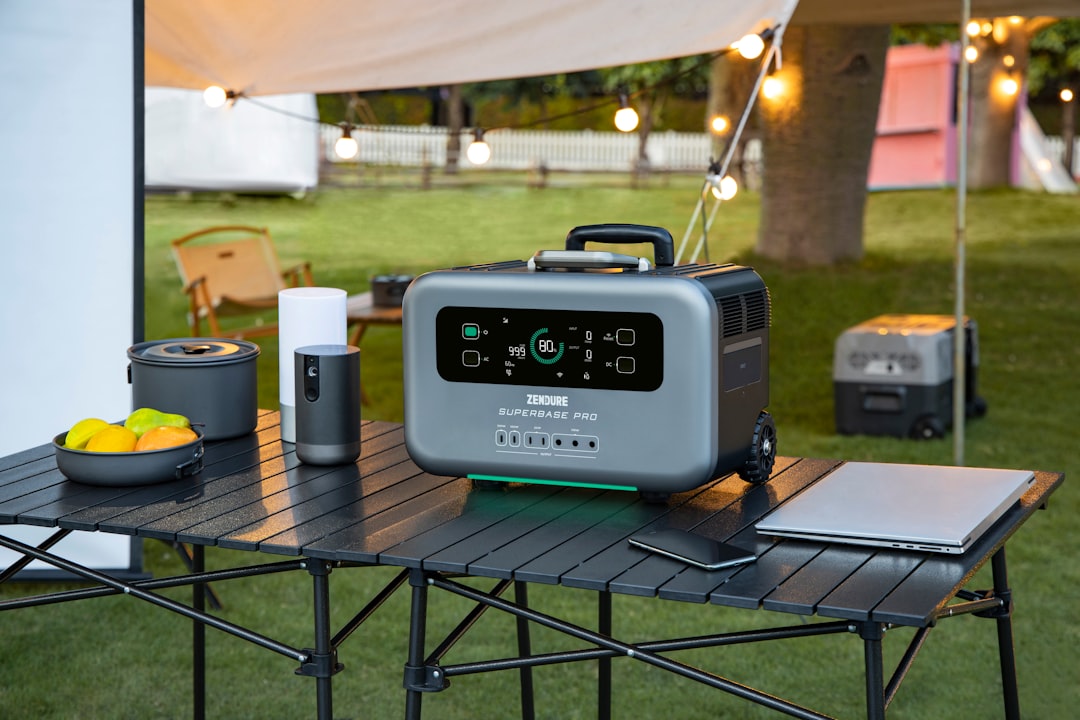
Photo: Zendure Power Station via Unsplash.
01 — Understand
Learn the basics
02 — Size
Calculate the load
03 — Compare
Check what matters
04 — Choose
Qualify the options
05 — Use
Operate it correctly
01 — START WITH THE REQUIREMENT
Start With What You Need to Power
Choosing a portable power station should begin with your electrical requirement, not with a brand name or the largest battery you can find.
A power station has to satisfy two different needs:
W — Power requirement
— can it supply enough watts to operate the device?
Wh — Energy requirement
— does it store enough watt-hours to keep that device running for the required amount of time?
That distinction is the foundation of portable power station sizing.
A refrigerator may require relatively modest power during normal operation but higher power when its compressor starts. A microwave may demand high wattage but operate for only a few minutes. A router may consume far less power but need to stay online for many hours.
The right station therefore depends on the relationship between:
1. Load
2. → running watts
3. → starting or surge requirement
4. → operating time
5. → required watt-hours
6. → portable power station specifications
If you already know what you want to power, begin with our portable power station sizing guide.
02 — READ THE NUMBERS CORRECTLY
Understand the Numbers Before Comparing Power Stations
Portable power station specifications become much easier to compare once you understand what each number controls.
Battery Capacity
Battery capacity is normally expressed in watt-hours (Wh).
It describes how much electrical energy the battery is rated to store.
More watt-hours can provide more runtime, but capacity alone does not tell you whether a station can operate a high-power appliance.
Continuous Output
Continuous output is measured in watts (W).
It tells you how much power the inverter can continuously supply to connected AC devices under the product’s specified conditions.
A large battery with insufficient output can still be the wrong station for your appliance.
Starting and Surge Power
Some appliances—including refrigerators, freezers, pumps and motor-driven equipment—can require more power at startup than during normal operation.
That makes the relationship between running watts and starting watts important when matching a station to these loads.
Watts vs Watt-Hours
Watts and watt-hours answer different questions.
Watts tell you how much power is required at a moment in time.
Watt-hours tell you how much energy is required over time.
Understanding both is essential before choosing a battery size or inverter output.
03 — ESTIMATE USEFUL RUNTIME
Calculate How Long a Portable Power Station Will Run Your Devices
Runtime is not determined by battery capacity alone.
A useful starting relationship is:
Estimated runtime = usable battery energy (Wh) ÷ average load (W)
A station rated at a certain number of watt-hours should therefore not automatically be treated as though every rated watt-hour will reach your appliance.
Use our portable power station runtime guide to understand the calculation, then see why usable capacity can be lower than rated capacity.
But real-world runtime can also be affected by:
✓ Inverter and conversion losses;
✓ The station’s own energy consumption;
✓ Changing appliance loads;
✓ Output type;
✓ Battery temperature;
✓ Battery age.
04 — MATCH THE DEVICE
What Can a Portable Power Station Run?
Portable power stations can supply many types of compatible electrical devices, but appliance category alone does not establish compatibility.
The correct process is to compare the specific appliance’s electrical requirements with the specific power station’s capabilities.
That can include:
01 — Refrigerators;
02 — Freezers;
03 — CPAP equipment;
04 — Wi-Fi routers and modems;
05 — Laptops and monitors;
06 — Televisions;
07 — Lights;
08 — Fans;
09 — Microwaves;
10 — Coffee makers;
11 — Selected power tools;
12 — Other compatible AC, USB and DC devices.
For every device, check:
Running power
Startup demand when relevant
Required runtime
Connection requirements
—
against:
Continuous output
Surge capability
Usable battery capacity
Available ports
Start with our guide to what appliances a portable power station can run →.
05 — SIZE FOR THE SITUATION
Size a Portable Power Station for Your Use Case
The same portable power station can be an excellent fit for one user and a poor fit for another.
Use-case sizing starts with the loads that actually need power.
01 — Home Backup
Identify essential devices first, calculate their combined power requirement and estimate how much energy they consume during the expected outage period.
02 — Refrigerator Backup
Refrigerator backup requires attention to both compressor startup and energy consumption over time.
03 — Freezer Backup
Freezers create a similar relationship between compressor power, cycling behavior and required backup duration.
04 — CPAP Backup
For CPAP equipment, use the electrical requirements of the exact device and account for accessories or settings that affect power consumption.
05 — Internet Backup
A router, modem and other networking equipment may have modest power requirements but often need to remain operating for many hours.
06 — Camping
Camping power needs can include phones, lights, refrigeration, cameras, laptops, fans and other equipment. Daily energy consumption is usually more useful than choosing capacity from trip length alone.
07 — RV Power
RV users may need to combine battery capacity with solar input, vehicle charging, AC appliances and repeated daily cycling.
Home Office
Plan backup power for laptops, monitors and essential work electronics.
06 — BATTERY OWNERSHIP
Understand Portable Power Station Batteries
Battery chemistry affects how a power station behaves across years of ownership.
Two important concepts are:
battery capacity — how much energy is available for use;
and:
battery longevity — how the battery retains capacity over repeated cycling and calendar aging.
CHEMISTRY
LiFePO4 and Lithium-Ion
Many modern power stations use LiFePO4, or LFP, while some products and older generations use NMC/NCM-type lithium-ion chemistry.
LFP is itself a lithium-ion chemistry.
The practical comparison involves factors such as:
Cycle life; · Thermal stability; · Energy density; · Product weight; · Frequent-cycling suitability.
How Long Will the Battery Last?
Battery life should not be confused with runtime.
Runtime asks how many hours a station powers a load on one charge.
Battery lifespan involves:
Cycle aging; · Calendar aging; · Chemistry; · Temperature; · Storage; · Usage frequency.
Protect Battery Longevity
Good battery care focuses on reducing avoidable stress while still using the power station for its intended purpose.
Important considerations include:
Heat exposure; · Charging temperature; · Long-term state of charge; · Deep-discharge storage; · Battery-saving modes; · Ventilation.
Learn how to make a portable power station battery last longer →
07 — REPLACE THE ENERGY YOU USE
Learn How Portable Power Stations Recharge
A portable power station is useful only if you have a practical way to replace the energy you consume.
Charging methods
Depending on the model, charging options can include:
AC — Household AC power;
PV — Solar panels;
12V — Vehicle charging;
ALT — Dedicated alternator charging;
USB-C — USB-C input;
+ — Supported combined charging methods.
The correct method depends on the exact station’s:
Input voltage; · Current limit; · Maximum charging power; · Connectors; · Battery temperature; · Charging controls.
TIME
How Long Does Charging Take?
Recharge time depends on both battery size and actual charging power.
A larger battery can sometimes recharge faster than a smaller battery when it supports substantially more input power.
SOLAR
Solar Charging
Solar panels can provide off-grid energy for camping, RV use and extended outages, but panel compatibility requires more than matching wattage.
You also need to check:
Voltage; · Current; · Open-circuit voltage; · Connector; · Solar-input limits.
Learn how to charge a portable power station with solar panels →
08 — COMPARE MEASURABLE ATTRIBUTES
Compare Portable Power Stations by Requirement, Not Marketing Labels
Portable power stations are often promoted with terms such as:
high capacity;
fast charging;
lightweight;
long-lasting;
home backup;
solar generator;
UPS.
Those descriptions are useful only when connected to measurable specifications.
Power Station Scout evaluates the attributes that determine whether a product actually fits a use case.
That includes:
01 — Capacity
How much battery energy is available?
02 — Continuous Output
Can the station sustain the intended appliances?
03 — Starting Capability
Can it handle startup demand?
04 — Runtime
How long can it realistically support the load?
05 — Battery Chemistry and Cycle Life
How is the battery designed to age across repeated use?
06 — Charging
How quickly and flexibly can energy be restored?
07 — Solar Input
How much compatible photovoltaic input can the station accept?
08 — Portability
Does the capacity-to-weight relationship fit the way the station will be transported?
09 — Ports and Connectivity
Can it directly connect to the required devices?
10 — UPS/EPS Capability
Can it provide the backup behavior required for supported equipment?
11 — Expandability
Can battery capacity grow with future requirements?
12 — Price and Value
Does the product provide an appropriate combination of capability and cost after it qualifies for the intended load?
Price should not be the first filter if the station cannot meet the electrical requirement.
09 — MOVE FROM QUALIFICATION TO SELECTION
Find Portable Power Stations for Specific Priorities
Once you understand your requirements, move from technical qualification to product selection.
Explore portable power stations by the attribute or use case that matters most to you.
Best Portable Power Stations
Compare qualifying models across capacity, output, charging, battery design, portability and intended use.
Best LiFePO4 Portable Power Stations
For buyers prioritizing long cycle life and LFP battery chemistry.
Best for Home Backup
Compare stations designed around longer runtime, stronger output and backup-oriented features.
Best for Camping
Compare portable options based on usable capacity, weight, charging flexibility and outdoor use.
Best Lightweight Options
When portability matters as much as battery capacity.
Best Fast-Charging Options
When short recharge windows are a major requirement.
10 — COMPARE THE SYSTEM
Portable Power Station or Another Backup-Power Option?
A portable power station is not the only way to provide temporary electricity.
The correct alternative depends on the problem you need to solve.
Compare portable power stations with:
These comparisons focus on differences in:
stored energy;
output;
runtime;
fuel or charging requirements;
portability;
backup behavior;
intended use.
The goal is not to declare one technology universally better.
It is to identify which system fits the requirement.
11 — OWN IT CORRECTLY
Use and Maintain Your Portable Power Station Correctly
Choosing the right station is only part of ownership.
Portable power stations also need to be operated and stored according to their specifications.
Explore our portable power station safety and care resources or diagnose a problem through the portable power station troubleshooting section.
Important ownership topics include:
indoor use;
battery safety;
hot and cold temperatures;
long-term storage;
charging behavior;
unexpected shutdowns;
battery drain;
solar-charging problems.
12 — EVIDENCE BEFORE CONCLUSIONS
How Power Station Scout Researches Portable Power Stations
Portable power station specifications can look precise while still being easy to misinterpret.
Power Station Scout separates different types of evidence rather than presenting every number as though it came from the same source.
Our guides and evaluations can use:
01 — Manufacturer Documentation
Specifications, manuals, support documentation and product information from the manufacturer.
02 — Credible Independent Testing
Third-party measurements where the methodology and exact tested product can be identified.
03 — Transparent Calculations
Runtime, sizing and value calculations based on clearly stated formulas and inputs.
04 — Explicit Assumptions
When exact measured information is unavailable, assumptions are identified instead of being presented as measurements.
We do not describe a calculation as a test.
We do not claim that we physically tested a product unless Power Station Scout actually performed and documented that testing.
And a manufacturer-stated specification remains identified as a manufacturer specification when that distinction matters.
This evidence-first approach helps keep comparisons centered on the portable power station attributes that affect actual selection and use.
13 — FOLLOW A BETTER SEQUENCE
A Better Way to Choose a Portable Power Station
You do not need to memorize every electrical specification.
Use this sequence:
1. Identify Your Loads
What devices or appliances need power?
2. Determine Running and Startup Power
How many watts must the station support?
3. Determine Required Runtime
How long must those loads operate?
4. Calculate Required Energy
How many usable watt-hours are needed?
5. Match the Power Station
Filter products by output, capacity and compatibility.
6. Evaluate Battery and Charging
Compare chemistry, cycle life, charging speed and solar capability.
7. Compare Qualified Products
Only compare price, features and convenience after the products meet the requirement.
8. Choose for Your Actual Use Case
Home backup, camping, RV travel and portable electronics can require very different combinations of the same attributes.
UNDERSTAND. SIZE. COMPARE. CHOOSE. USE.
Power Station Scout
Power Station Scout is focused specifically on portable power stations and the attributes, calculations and decisions required to use them effectively.
Whether you are planning for a power outage, keeping a refrigerator running, building a camping power setup, preparing an RV system or simply trying to understand watts and watt-hours, start with the requirement—then work toward the power station that matches it.
DISCLOSURE
Affiliate Disclosure
Power Station Scout may earn a commission from qualifying purchases made through affiliate links, including eligible purchases through the Amazon Associates program. Affiliate relationships do not determine which products qualify for a use case or how product specifications are evaluated.