
Best Portable Power Stations for CPAP Backup
Our current CPAP backup picks prioritize usable battery capacity, low-load efficiency, quiet overnight operation, compatible AC/DC power paths, continuity settings, and portability—not oversized inverter wattage.
Compare the picks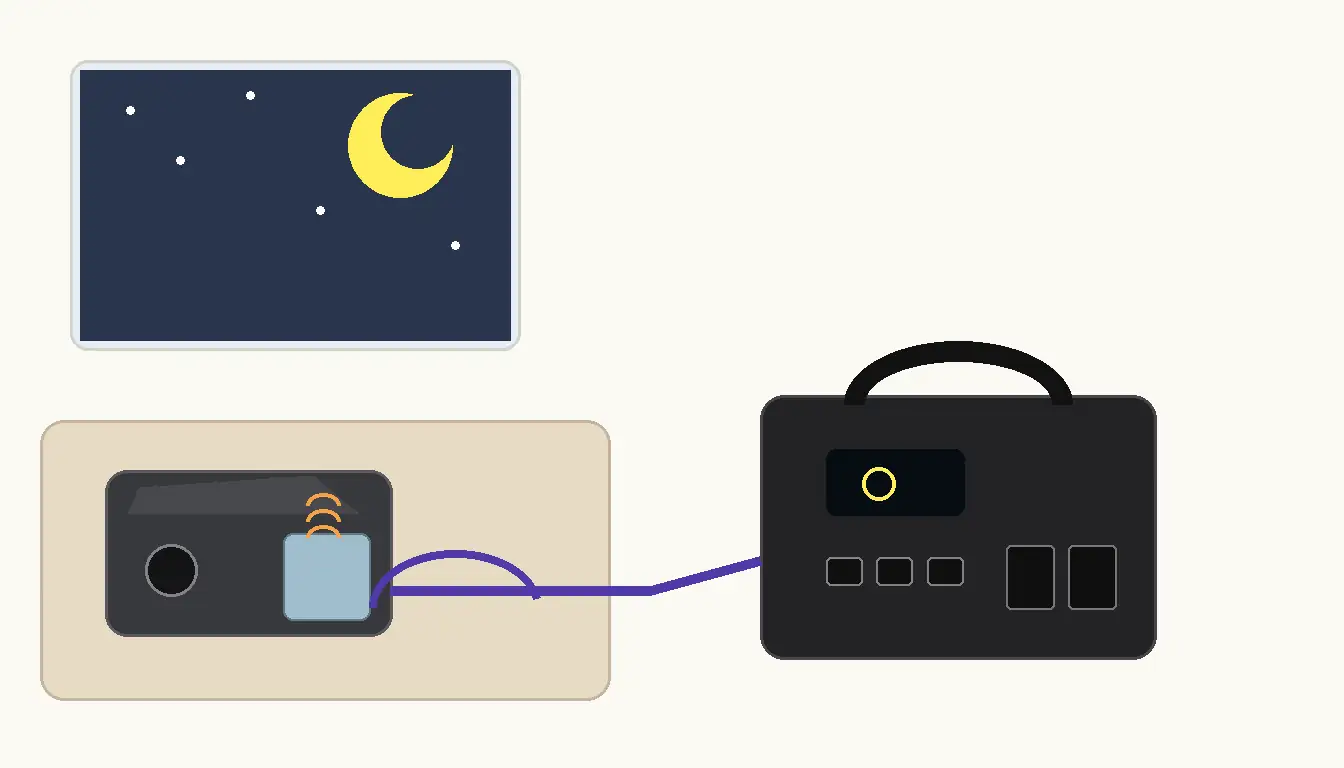
The EcoFlow RIVER 3 Plus is our best overall portable power station for CPAP backup from a technical standpoint because its design specifically targets low-wattage efficiency, which matters much more for CPAP use than an oversized inverter.
It has:
- 286Wh LiFePO4 capacity;
- 600W AC output;
- 12.6V/10A car output;
- 100W USB-C;
- less than 30dB manufacturer-stated noise;
- less than 10ms UPS switching;
- expansion to 572Wh or 858Wh.
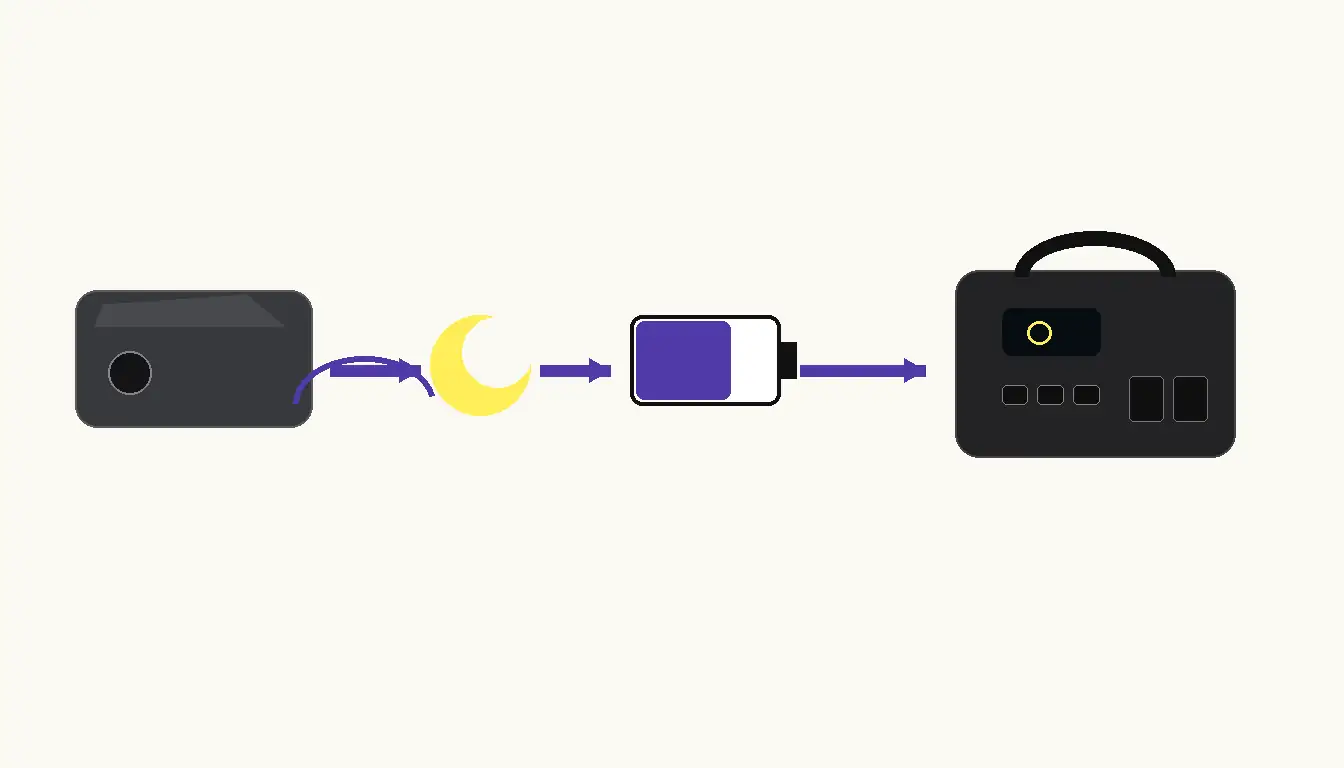
Most importantly, EcoFlow says the RIVER 3 platform provides up to twice the runtime for light-wattage appliances compared with conventional designs in its internal testing. CPAP machines often operate in exactly that low-power region, making low-load efficiency more relevant than the 600W inverter rating itself.
However, there is a commercial caveat: EcoFlow's current U.S. direct listing showed the standalone RIVER 3 Plus as sold out / pre-order during this September 2026 evidence review. Availability should therefore be rechecked immediately before publishing affiliate buttons.
For users who need substantially more than one night, the Jackery Explorer 600 v2 is the stronger capacity-first option at 640Wh, while the BLUETTI AC2P is our compact budget pick at 230.4Wh.
Before choosing any model, calculate your CPAP requirement first:
Best Portable Power Stations for CPAP Backup: Quick Comparison
| Pick | Capacity | AC Output | DC Output | Weight | CPAP-Relevant Strength | Verdict |
|---|---|---|---|---|---|---|
| EcoFlow RIVER 3 Plus | 286Wh | 600W | 12.6V/10A | 10.4 lb | Low-wattage efficiency, <30dB, expandable | Best Overall — Availability Conditional |
| Jackery Explorer 600 v2 | 640Wh | 500W | 12V/10A | ~14.1 lb | Much larger reserve for multiple nights, <10ms UPS | Best for Multiple Nights |
| Jackery Explorer 500 v2 | 512Wh | 500W | 12V car output | 12.6 lb | Quiet, compact, 0.5kWh class | Best Lightweight 500Wh Pick — U.S. Availability Conditional |
| Anker SOLIX C300 | 288Wh | 300W | Multiple DC/USB outputs | Compact | Very quiet, compact, fast recharge | Best Ultra-Compact Alternative |
| BLUETTI AC2P | 230.4Wh | 300W | 12V/10A | 7.9 lb | Low weight, DC output, inexpensive capacity class | Best Budget Pick |
These are consumer portable power stations, not medical-device UPS systems.
A CPAP user's own manufacturer instructions, prescribed equipment, approved power accessories, and outage plan remain the primary authority.
1. EcoFlow RIVER 3 Plus — Best Overall for CPAP Backup
Why We Picked It
CPAP machines are unusual portable-power loads.
They generally need:
- relatively little inverter power;
- long overnight runtime;
- low noise;
- uninterrupted output;
- good efficiency at small loads.
That makes a station optimized for:
20W
more relevant than one optimized around:
2,000W.
EcoFlow explicitly positions the RIVER 3 platform around improved low-wattage efficiency and says it can deliver up to 2× runtime for light-wattage appliances under its internal comparison testing.
That is the strongest product-level reason for ranking it first.
Key Specifications
Battery capacity: 286Wh
Battery chemistry: LiFePO4
AC output: 600W
Surge: 1,200W
USB-C: up to 100W
12V output: 12.6V / 10A / 126W
UPS transfer: manufacturer-stated <10ms
Noise: manufacturer-stated <30dB
Weight: 10.4 lb
AC recharge: approximately 60 minutes manufacturer-stated
Solar input: up to 220W
Expansion: up to 858Wh.
Why Low-Wattage Efficiency Matters
Suppose a CPAP averages:
15W
and a conventional inverter consumes another:
10W.
Effective battery load becomes:
25W.
That makes inverter overhead enormous relative to the medical device itself.
A platform deliberately designed to reduce light-load losses can therefore increase real CPAP runtime even when its nominal capacity looks similar to competitors.
EcoFlow's low-wattage runtime claim remains:
manufacturer tested, not Power Station Scout observed.
Quiet Operation Is Relevant Overnight
EcoFlow states noise below:
30dB
under its published test conditions.
That is especially useful because the power station may sit:
- beside a bed;
- in a bedroom;
- in a tent.
A product that is electrically adequate but repeatedly runs a loud fan can be less suitable for sleep-related equipment.
Noise remains operating-condition dependent.
It Supports a 12V Output
The station provides:
12.6V / 10A
through its car-style DC output.
That can be useful for CPAP machines with a manufacturer-supported DC/DC converter.
For example, ResMed currently lists an Air10 DC/DC converter that accepts a 12V or 24V source and converts it to the required 24V/90W output for compatible AirSense 10 and AirCurve 10 devices.
Do not connect a CPAP directly to the station's 12V port unless the CPAP manufacturer specifically supports that configuration.
Capacity Expansion Is Excellent for Changing Needs
Base:
286Wh
With EB300:
572Wh total
With EB600:
858Wh total.
This is particularly attractive for CPAP users because you can begin with:
one-night-class storage
and later move toward:
multi-night storage
without replacing the primary station.
Main Limitation: Current U.S. Direct Availability
EcoFlow's direct U.S. listing reviewed for this article showed the RIVER 3 Plus as:
sold out / pre-order.
Other retail inventory can differ.
Because Power Station Scout targets U.S. buyers:
Best For
- typical one-night CPAP backup;
- users sensitive to fan noise;
- low-wattage AC loads;
- supported DC CPAP operation;
- buyers who may expand capacity later.
Evidence Rating
Manufacturer specifications: Verified
Low-load efficiency: Manufacturer tested
Noise: Manufacturer tested
CPAP-specific independent test: Not found
Power Station Scout hands-on test: Not performed
Power Station Scout Verdict
PASS TECHNICALLY / CONDITIONAL COMMERCIALLY — Best Overall if Available
2. Jackery Explorer 600 v2 — Best for Multiple CPAP Nights
If you already know that:
286Wh is too small
the Jackery Explorer 600 v2 offers a much stronger energy reserve without jumping into heavy 1kWh systems.
Jackery currently lists:
- 640Wh capacity;
- 500W AC output;
- 1,000W peak;
- 120W car output;
- 100W USB-C;
- LiFePO4 battery;
- 10ms UPS;
- approximately 14.1 lb weight.
Why 640Wh Makes Sense for CPAP
Suppose your exact setup consumes:
150Wh/night.
Three nights require:
450Wh delivered to the CPAP.
After:
- PPS losses;
- inverter overhead;
- reserve;
a 286Wh station is clearly insufficient.
A 640Wh-class station is a much more realistic match.
If the setup uses:
100Wh/night,
640Wh gives considerably more reserve.
It Still Has More Inverter Power Than CPAP Requires
The Explorer 600 v2 provides:
500W continuous AC output.
Most CPAP systems do not need anywhere near this continuously.
The value of this unit is not:
500W.
It is:
640Wh in a still-portable package.
Supported DC Operation Can Reduce AC Overhead
The station includes:
12V / 120W car output.
For a CPAP model with an approved 12V-source converter, this gives an alternative to running the AC inverter overnight.
ResMed's Air10 converter, for example, supports operation from a 12V or 24V source.
Again, use the CPAP manufacturer's specific converter rather than a generic barrel cable.
UPS Functionality Is Useful but Not Medical Certification
Jackery currently lists:
10ms UPS + surge protection
for the Explorer 600 v2.
That can be convenient if utility power disappears while the CPAP is connected.
But:
Consumer UPS functionality does not automatically make the unit a certified medical UPS.
For medically consequential outage planning, follow CPAP manufacturer and healthcare guidance.
One Important Setting: Energy-Saving Mode
Jackery includes an energy-saving mode on this model.
That can preserve battery energy for idle devices.
For CPAP use, however, any:
- auto-off threshold;
- timeout behavior
must be checked carefully.
You do not want an overnight low-power device unintentionally switched off.
Best For
- two or more nights;
- CPAP with heated humidity;
- CPAP plus phone/router;
- users wanting more margin without a 1kWh battery.
Evidence Rating
Manufacturer specifications: Verified
Independent CPAP test: Not found
Power Station Scout hands-on: Not performed
Power Station Scout Verdict
PASS — Best for Multiple Nights
3. Jackery Explorer 500 v2 — Best Lightweight 500Wh-Class Option
The Explorer 500 v2 sits in a particularly useful CPAP capacity class:
512Wh.
Jackery currently specifies:
- 512Wh capacity;
- 500W output;
- 1,000W instantaneous power;
- 12.6 lb weight;
- 200W solar input;
- approximately 1.3-hour AC charging;
- LiFePO4 chemistry.
TechRadar independently tested the unit and found it:
- compact;
- quiet;
- easy to operate;
- capable of seamless UPS handover in its office test.
Why 512Wh Is a Useful CPAP Sweet Spot
A 500Wh-class battery can fit many:
- one-night heated configurations;
- two- or three-night lower-power setups.
Example:
CPAP:
150Wh/night
Two nights:
300Wh
That leaves more headroom than a 230–288Wh station.
At the same time, 512Wh is far easier to transport than:
- 1kWh;
- 2kWh
systems.
Independent Quiet-Operation Evidence
TechRadar described the Explorer 500 v2 as compact and quiet and reported successful real-world use across smaller household and electronic loads.
Jackery also markets low acoustic levels for the model, with published claims below the mid-30dB range depending on operating condition.
For a bedroom power source, this is a meaningful attribute.
UPS Testing Was Successful
TechRadar tested UPS switchover with an approximately:
220W office load
and reported no visible interruption during the test.
That is independent evidence of its transfer behavior.
It was not a CPAP test.
Watch the Energy-Saving Setting
Jackery's current documentation says Energy Saving Mode can automatically switch outputs off after six hours of low-power activity under defined thresholds.
For CPAP:
Energy Saving Mode should not be enabled blindly.
If continuous overnight output is required, configure the unit according to its exact instructions so it does not interpret the CPAP as an idle load.
U.S. Availability Is Currently a Concern
Jackery's current U.S. Explorer 500 v2 page was live with a U.S. price but also displayed:
“product shown on this page is not available for purchase”
during this evidence review.
This makes it a technically strong but commercially conditional recommendation.
Best For
- users wanting around 500Wh;
- lower weight;
- two-night lower-power CPAP backup;
- heated CPAP setups needing more margin than 300Wh.
Evidence Rating
Manufacturer specifications: Verified
Independent general testing: Observed
Independent UPS behavior: Observed
CPAP-specific test: Not found
Current U.S. availability: Conditional
Power Station Scout Verdict
CONDITIONAL PASS — Best Lightweight 500Wh Option
4. Anker SOLIX C300 — Best Ultra-Compact Alternative
The Anker SOLIX C300 is another strong 288Wh-class option.
Current product information lists:
- 288Wh LiFePO4 battery;
- 300W continuous output;
- 600W peak;
- 140W bidirectional USB-C;
- fast wall charging;
- approximately 25dB manufacturer-stated operating noise at 1 meter.
Why It Fits CPAP Better Than Many Larger Stations
A CPAP usually does not need:
- 1,500W;
- 2,000W;
- 3,000W
of AC output.
What matters more is:
- enough Wh;
- low noise;
- compact size;
- efficient charging.
The C300 fits that profile well.
288Wh Is Primarily a One-Night Class
Suppose your CPAP uses:
100Wh/night.
288Wh provides meaningful reserve.
Suppose instead your heated configuration uses:
300–350Wh/night.
Then the C300 may not provide a full night after:
- inverter losses;
- battery reserve.
Therefore:
Do not recommend the C300 without first knowing nightly Wh.
Quiet Operation Is a Major Strength
Anker states:
25dB at 1 meter
under its published conditions.
That makes it especially attractive for:
- bedside backup;
- tent use.
USB-C Is Useful but Does Not Automatically Power a CPAP
Its high-power USB-C ports are valuable for:
- phones;
- laptops;
- compatible equipment.
But CPAP compatibility requires the device or manufacturer-approved converter to support the correct USB-C power profile.
Do not recommend a:
USB-C-to-CPAP cable
unless the CPAP manufacturer supports it.
Best For
- compact one-night backup;
- travel;
- quiet bedroom use;
- users whose measured CPAP consumption is clearly below 288Wh.
Evidence Rating
Manufacturer specifications: Verified
Noise: Manufacturer stated
Independent CPAP runtime: Not found
Power Station Scout hands-on: Not performed
Power Station Scout Verdict
PASS — Best Ultra-Compact Alternative
5. BLUETTI AC2P — Best Budget CPAP Power Station
The BLUETTI AC2P is a compact 230.4Wh LFP power station with:
- 300W AC output;
- 12V/10A DC car outlet;
- 100W USB-C;
- 7.9 lb weight;
- ≤20ms UPS transfer;
- 270W maximum AC charging;
- up to 200W DC input.
It is our budget-oriented pick because it covers the basic CPAP-relevant output paths without carrying excess battery or inverter hardware.
Why the 12V Output Matters
Its:
12V / 10A
car outlet can be useful with manufacturer-approved CPAP DC converters.
For compatible AirSense 10/AirCurve 10 devices, ResMed's Air10 converter is explicitly designed to operate from a 12V or 24V DC source.
That can allow you to bypass the AC inverter.
Capacity Is the Limitation
At:
230.4Wh
the AC2P should be viewed as:
- one-night backup for efficient configurations;
- potentially less than one full night for high-energy heated configurations.
From #30, ResMed AirSense 10 examples derived from the manufacturer's own current tables can approach:
several hundred Wh over eight hours
when humidification and heated tubing are active.
So:
230Wh is not automatically enough for every CPAP night.
UPS Is Slower Than Our Other Picks
BLUETTI specifies:
≤20ms switching time.
That may be acceptable for many consumer electronics.
It should not be converted into a blanket guarantee of uninterrupted CPAP therapy.
Best For
- low-cost backup;
- lower-power CPAP setups;
- manufacturer-supported DC operation;
- travel where every pound matters.
Evidence Rating
Manufacturer specifications: Verified
CPAP-specific test: Not found
Power Station Scout hands-on: Not performed
Power Station Scout Verdict
PASS — Best Budget Pick
Which Portable Power Station Should You Choose for Your CPAP?
The product ranking matters less than matching the station to:
nightly Wh.
Choose the EcoFlow RIVER 3 Plus If You Need One-Night Efficiency
Best when:
- CPAP consumption is comfortably below 286Wh;
- low-wattage efficiency matters;
- low noise matters;
- future expansion appeals.
Recheck U.S. availability first.
Choose the Jackery Explorer 600 v2 If You Need Multiple Nights
Best when:
- humidification raises nightly consumption;
- two or three nights are required;
- you also want to charge a phone or router.
Its:
640Wh
gives much more energy reserve than compact 230–288Wh models.
Choose the Jackery Explorer 500 v2 If You Want Less Weight Than a 600Wh-Class Unit
Its:
512Wh
and:
12.6-lb weight
create a useful middle ground.
But current U.S. direct availability is conditional.
Choose the Anker SOLIX C300 for Compact, Quiet One-Night Use
Its:
- 288Wh battery;
- 25dB manufacturer-stated noise;
- compact design
make it appealing for bedroom or travel use.
Choose the BLUETTI AC2P When Price and Weight Matter Most
It is:
7.9 lb
with:
230.4Wh
and both:
- AC;
- 12V DC
output.
Best CPAP Power Station by Nightly Energy Requirement
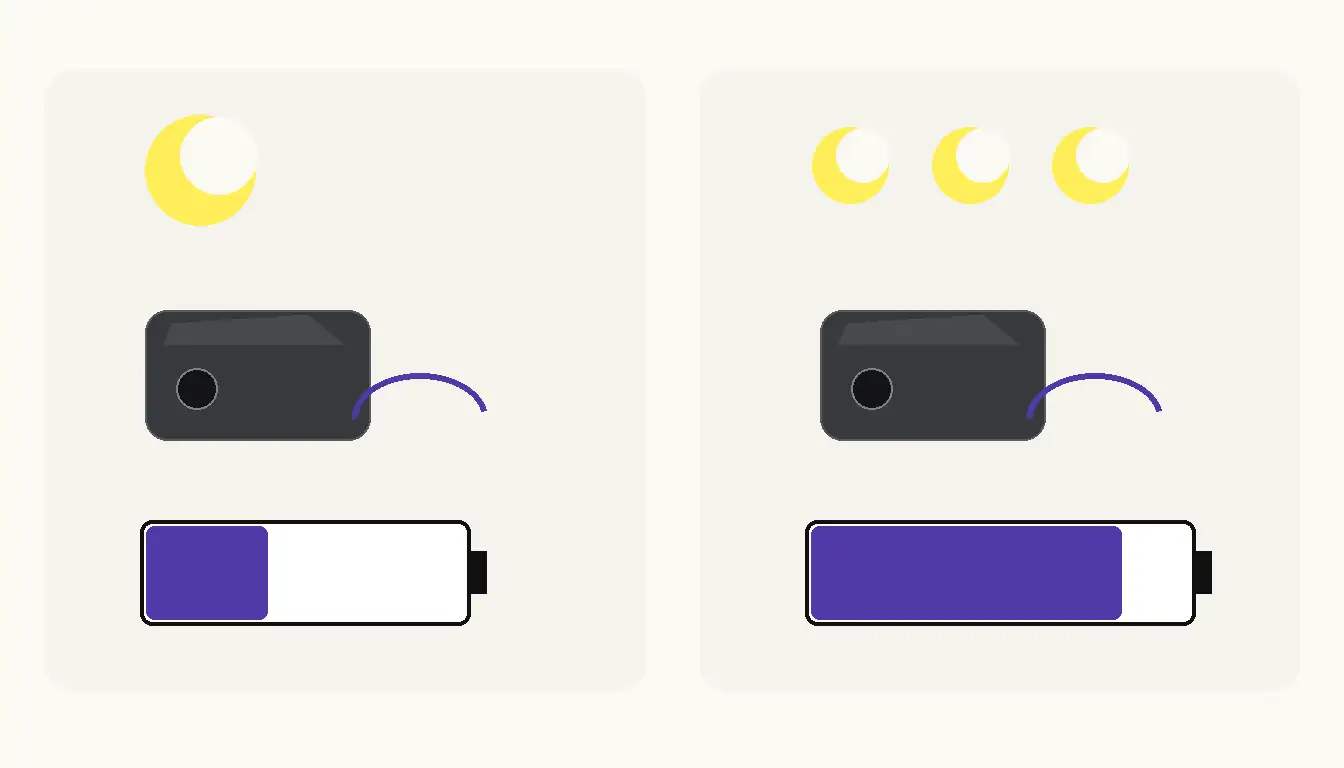
The table below assumes you have already measured or calculated your CPAP's nightly energy.
| Nightly CPAP energy | Practical product class |
|---|---|
| 40–80Wh | 200–300Wh PPS |
| 80–150Wh | 250–500Wh PPS |
| 150–250Wh | 300–600Wh PPS |
| 250–400Wh | 500–700Wh+ PPS |
| 400Wh+ | 600–1,000Wh+ PPS |
| Multiple nights | Multiply nightly Wh first |
These are planning classes.
Use actual:
- usable capacity;
- output path efficiency;
- additional loads.
For a 75Wh Night
A:
230–288Wh
station provides substantial theoretical capacity relative to the CPAP load.
Candidates:
- BLUETTI AC2P;
- EcoFlow RIVER 3 Plus;
- Anker C300.
For a 150Wh Night
A 230Wh unit leaves much less margin once inverter overhead is included.
Better candidates:
- EcoFlow RIVER 3 Plus;
- Jackery Explorer 500 v2.
For a 300Wh Night
Do not choose:
230Wh or 286Wh
simply because the inverter wattage is adequate.
Better candidates:
- Jackery Explorer 500 v2;
- Jackery Explorer 600 v2.
For Two 300Wh Nights
Device requirement:
600Wh.
Even a 640Wh nominal battery gives limited headroom after conversion losses.
At that point consider:
- recharging each day;
- a larger 1kWh-class station.
AC vs DC Can Change Which Product Is Best
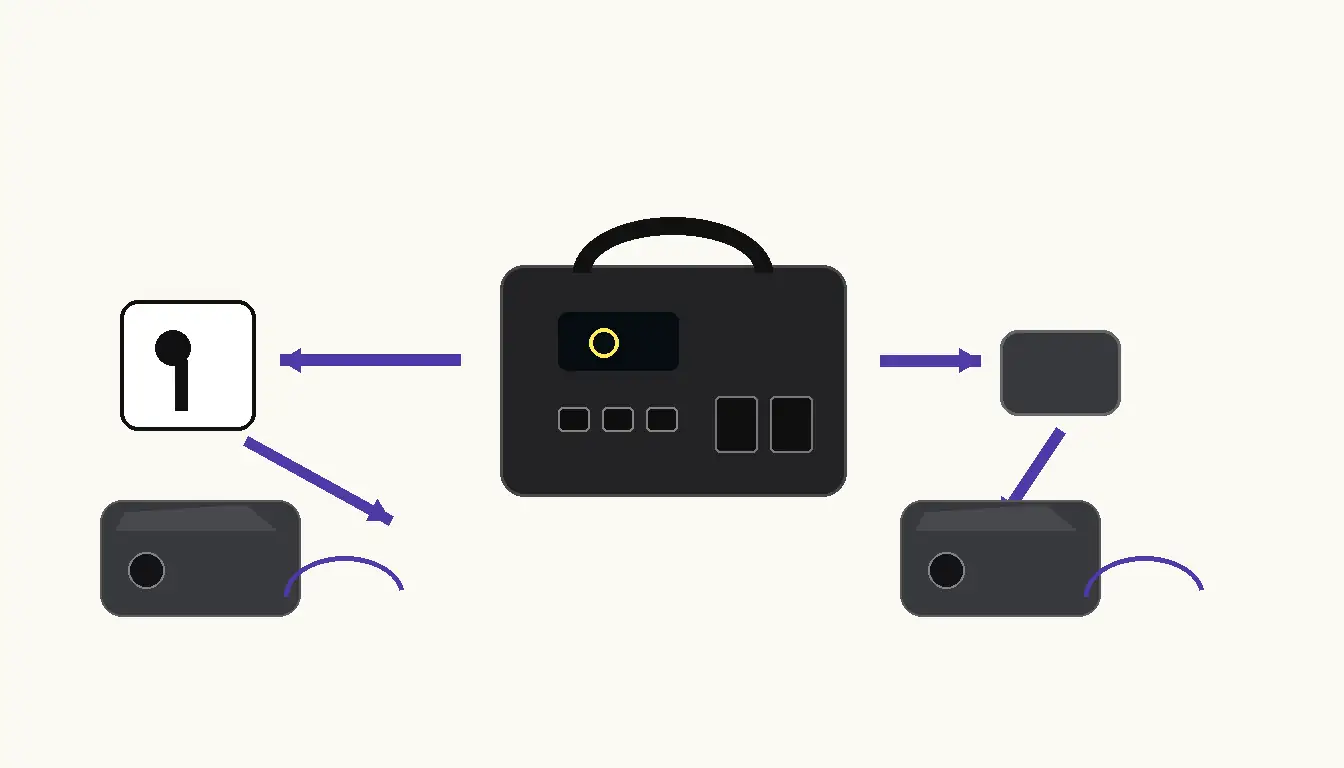
A station used through AC needs to run:
battery DC
→ inverter
→ CPAP AC adapter
→ CPAP.
A manufacturer-approved DC path may reduce conversion stages.
ResMed AirSense 10 / AirCurve 10
ResMed's current Air10 DC/DC converter accepts:
12V or 24V source input
and provides:
24V/90W output.
That makes a portable power station with a stable:
12V car outlet
particularly relevant.
Among our picks, that includes:
- EcoFlow RIVER 3 Plus;
- Jackery 500/600-class stations;
- BLUETTI AC2P.
ResMed AirMini
ResMed separately offers an AirMini DC/DC converter for vehicle-style DC operation.
Do not assume the Air10 converter and AirMini converter are interchangeable.
AirSense 11 Requires Exact Current Accessory Verification
Current ResMed accessory documentation should be checked for the exact AirSense 11 power accessory available in the user's market.
Do not recommend:
- generic 12V-to-24V cables;
- unverified third-party adapters
as equivalent to manufacturer-approved power hardware.
Why Low-Load Efficiency Is More Important Than Maximum Watts
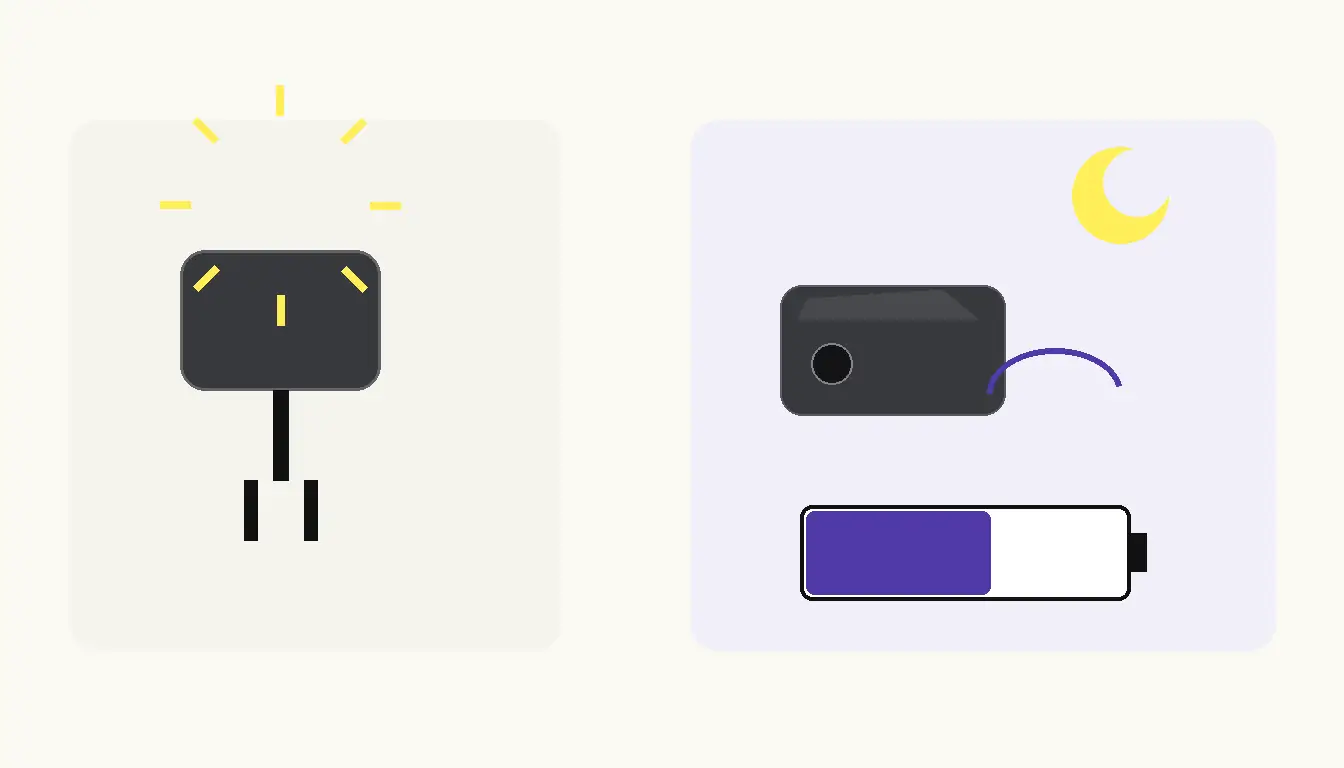
This is the central difference between CPAP recommendations and appliance recommendations.
A refrigerator may need:
800W+ startup.
A microwave may need:
1,400W.
A CPAP may average only:
10–40W, depending on configuration.
That means a massive inverter can actually be a disadvantage if it has high idle consumption.
Example
CPAP:
15W
Inverter idle overhead:
10W
Effective load:
25W.
In that case, 40% of the simplified battery draw is station overhead.
A low-loss design can materially extend overnight runtime.
This is why we give the EcoFlow RIVER 3 Plus a strong technical score for its manufacturer-tested low-wattage efficiency.
Noise Matters Because the Station Runs Beside a Sleeping User

A CPAP backup station may remain active for:
7–9 hours beside a bed.
Relevant acoustic evidence includes:
EcoFlow RIVER 3 Plus
Manufacturer:
<30dB.
Anker SOLIX C300
Manufacturer:
25dB at 1 meter under stated conditions.
Jackery Explorer 500 v2
Current third-party and manufacturer coverage characterize it as a quiet unit, with published Jackery acoustic claims in the sub-30s depending on load/charging condition.
Noise can increase during:
- battery charging;
- higher loads;
- hot conditions.
Do not guarantee silent operation.
Watch ECO and Automatic Output Shutdown
Low-power appliances can trigger energy-saving systems.
That is particularly important with CPAP.
Jackery Explorer 500 v2 Example
Current documentation says Energy Saving Mode can shut outputs down after approximately:
6 hours of low-power activity
under its stated thresholds.
If the CPAP load falls into the low-power threshold:
This setting must be configured appropriately for overnight use.
The same principle applies to any PPS with:
- ECO;
- auto-off;
- AC timeout.
UPS/EPS Is Useful, but Do Not Overstate It
Several recommended products offer rapid transfer:
- EcoFlow RIVER 3 Plus: <10ms manufacturer-stated;
- Jackery Explorer 600 v2: 10ms manufacturer-stated;
- Jackery Explorer 500 v2: <10ms manufacturer-stated and independently demonstrated under a non-CPAP office load;
- BLUETTI AC2P: ≤20ms manufacturer-stated.
These numbers do not prove:
“CPAP therapy can never be interrupted.”
The CPAP manufacturer's backup-power guidance remains controlling.
Best Power Station for CPAP With Humidifier
Humidification changes the answer dramatically.
In ResMed's official AirSense 10 battery guide, at one specified pressure:
- non-heated setup uses far less battery current;
- humidifier increases it;
- ClimateLineAir plus humidification increases it further.
That evidence was covered in detail in #30.
For a high-energy heated configuration, our preference shifts toward:
Jackery Explorer 600 v2
because:
640Wh
gives much more overnight margin.
Jackery Explorer 500 v2
can also work where:
512Wh
comfortably exceeds the calculated requirement.
Do not recommend a 230Wh model for a 350Wh/night setup.
Best Power Station for CPAP Without Humidifier
For efficient CPAP-only operation:
EcoFlow RIVER 3 Plus
is our technical favorite.
BLUETTI AC2P
is the budget alternative.
Anker C300
is attractive where:
- compact dimensions;
- noise
matter heavily.
Best Portable Power Station for AirSense 10
The key advantage for AirSense 10 is ResMed's official:
Air10 DC/DC converter.
It can use a:
12V or 24V DC source.
That makes stations with a:
12V car outlet
particularly useful.
From our shortlist:
- EcoFlow RIVER 3 Plus;
- BLUETTI AC2P;
- Jackery Explorer 500 v2;
- Jackery Explorer 600 v2
fit that infrastructure from the power-station side.
You must still use the correct ResMed converter.
Best Portable Power Station for AirMini
AirMini is a much lower-power machine than many heated bedside setups.
ResMed specifies:
- 6.3W typical;
- 27W peak;
- 1W standby
for AirMini under its documented conditions.
That means an enormous 600Wh–1kWh station can be unnecessary for many AirMini users.
For travel-oriented AirMini backup:
- BLUETTI AC2P;
- EcoFlow RIVER 3 Plus;
- Anker C300
make more sense than a 20–30 lb home-backup station.
Best CPAP Power Station for Camping
For camping, weight and solar become more important.
EcoFlow RIVER 3 Plus
10.4 lb with:
220W solar input.
BLUETTI AC2P
7.9 lb with:
200W maximum DC input.
Anker C300
compact with:
100W solar charging on the current C300 platform.
For multi-night camping, calculate whether solar can replace each night's CPAP consumption.
Best CPAP Power Station for Several Days
A compact 230–300Wh battery may work only if:
- nightly consumption is low;
- daytime recharge is dependable.
Without reliable recharging:
2–3 nights
move toward:
500–700Wh.
Several high-energy nights
may justify:
1kWh-class capacity.
Do not carry a 2kWh station purely because it has more watts unless your calculated energy need justifies the weight.
Why We Did Not Rank 1–2kWh Stations at the Top
Large power stations are excellent for:
- refrigerators;
- freezers;
- home backup.
But CPAP-only use has different priorities.
A 2kWh model can mean:
- 40–60 lb;
- higher cost;
- oversized inverter;
- unnecessary capacity.
For someone using:
100Wh/night
a 2kWh unit could represent nearly twenty nights of nominal CPAP-side energy before losses.
That is often excessive.
The best CPAP battery is not:
the biggest battery.
It is:
the smallest reliable station that comfortably covers the required nights and approved power path.
Safety and Medical-Device Limitations
Portable power stations are consumer power products.
They should not be presented as automatic substitutes for:
- hospital-grade backup;
- medically certified UPS systems;
- a clinician-directed emergency plan.
FDA advises users of electricity-dependent medical devices to understand:
- compatible backup power;
- device-manufacturer instructions;
- alternative power options;
- emergency planning.
If interruption of therapy could create a significant medical risk, coordinate outage planning with:
- CPAP equipment supplier;
- device manufacturer;
- healthcare professional.
Do not depend solely on an affiliate recommendation page.
Current Recall Check
Before publication, every commercial recommendation needs an exact-model CPSC check.
Searches performed for this September 11, 2026 draft did not surface an exact-model CPSC recall result for:
- EcoFlow RIVER 3 Plus;
- Jackery Explorer 500 v2;
- Anker SOLIX C300;
- BLUETTI AC2P.
That is not a permanent guarantee.
Recall status can change.
The publication workflow must recheck:
- exact brand;
- exact model;
- exact model number;
- CPSC recall database;
- manufacturer safety notices.
How We Ranked the Best CPAP Power Stations
Low-Load Efficiency — 30%
We favor:
- low inverter overhead;
- low-wattage optimization;
- efficient DC paths.
Usable Capacity — 25%
Enough battery must remain after:
- conversion loss;
- station overhead;
- reserve.
Overnight Continuity — 15%
We check:
- ECO behavior;
- AC timeout;
- UPS/EPS;
- supported DC output.
Noise — 10%
Bedroom equipment should be reasonably quiet.
Portability — 10%
CPAP users may need backup for:
- home;
- travel;
- camping.
Recharge — 5%
Fast AC or solar recovery improves multi-night resilience.
Evidence Quality — 5%
Priority:
independent measurement
→ manufacturer specification
→ manufacturer internal testing
→ calculation
→ inference.
Evidence Comparison
| Product | Strongest CPAP-Relevant Evidence |
|---|---|
| EcoFlow RIVER 3 Plus | Manufacturer low-load-efficiency and noise testing |
| Jackery Explorer 600 v2 | Current verified 640Wh / UPS / DC specs |
| Jackery Explorer 500 v2 | Independent general performance + UPS test |
| Anker SOLIX C300 | Manufacturer noise + capacity/output data |
| BLUETTI AC2P | Detailed official output/UPS specifications |
None of these currently has a standardized independent:
8-hour CPAP runtime comparison across identical conditions
in the evidence used for this page.
That should be clearly disclosed.
CPAP Power Station Buying Checklist
Confirm the CPAP
- Exact model
- Power adapter specification
- Nightly Wh
- Humidifier status
- Heated tube status
- Therapy hours
- Manufacturer-supported DC converter if applicable
Confirm the Battery
- Rated Wh
- Usable Wh
- AC idle draw
- 12V output if needed
- AC auto-off setting
- UPS/EPS behavior
- Noise
- Recharge speed
Confirm the Outage Plan
- One night or multiple nights
- Other loads
- Daytime charging
- Solar backup
- Alternative location with grid power
- Equipment supplier contact
Confirm the Current Product
- U.S. version
- Exact model number
- Current availability
- Current warranty
- Current CPSC recall check
Frequently Asked Questions
What Is the Best Portable Power Station for CPAP Backup?
Our technical pick is the EcoFlow RIVER 3 Plus because it combines 286Wh of capacity with manufacturer-tested low-wattage efficiency, less-than-30dB noise, 12V output, and expandable capacity. Current U.S. direct availability should be checked before purchase.
What Is the Best Power Station for Several CPAP Nights?
The Jackery Explorer 600 v2 is our preferred larger option at 640Wh without jumping to a heavy 1kWh station.
What Is the Best Budget CPAP Power Station?
The BLUETTI AC2P offers 230.4Wh, 300W AC, 12V/10A DC, USB-C and a low 7.9-lb weight.
Is 300Wh Enough for CPAP?
Sometimes. It can comfortably cover one night for many low-to-moderate-energy configurations but may be insufficient for heated humidification setups consuming several hundred Wh per night.
Is 500Wh Better?
Yes when:
- humidification is used;
- multiple nights are required;
- additional devices share the battery.
Do I Need a 1,000W Power Station for CPAP?
Usually not for output. CPAP systems typically need far less instantaneous power. Battery Wh and low-load efficiency usually matter more.
Can I Run My CPAP Directly From 12V?
Only when the CPAP manufacturer supports a compatible converter. ResMed's Air10 DC/DC converter, for example, is designed for 12V or 24V source operation with compatible AirSense 10/AirCurve 10 devices.
Is DC Better Than AC?
It can reduce conversion stages and improve runtime, but only use a manufacturer-approved power path.
Can I Run AirSense 10 From These Stations?
Potentially through AC or through ResMed's supported DC/DC converter with a suitable station output. Confirm exact accessories and instructions.
Which Station Is Quietest?
Among our current manufacturer claims, the Anker C300 is rated around 25dB at one meter under its test conditions, while EcoFlow states below 30dB for the RIVER 3 Plus. Test conditions differ, so those figures should not be treated as a direct independent comparison.
Can ECO Mode Shut a CPAP Off?
Potentially. Low-load automatic shutdown features must be configured so the output remains active all night.
Can a UPS Feature Guarantee Uninterrupted CPAP Therapy?
No. Consumer UPS transfer time alone does not establish medical-device suitability.
Can Solar Recharge a CPAP Battery During the Day?
Yes, when daily solar energy is sufficient to replace overnight CPAP consumption. Do not plan from solar-panel wattage alone.
Should I Buy a 2kWh Power Station for CPAP?
Usually not for CPAP alone unless you need:
- many nights;
- other household loads;
- exceptionally high backup reserve.
The Bottom Line
For most CPAP users, the best portable power station is not the one with the biggest inverter.
The priority order should be:
nightly CPAP Wh
→ usable battery Wh
→ low-load efficiency
→ approved AC/DC power path
→ overnight continuity
→ noise
→ number of nights
→ recharge options.
Our current technical rankings are:
Best Overall
EcoFlow RIVER 3 Plus
Best combination of:
- light-load optimization;
- 286Wh capacity;
- low noise;
- 12V output;
- expansion.
Commercial availability is currently conditional.
Best for Multiple Nights
Jackery Explorer 600 v2
Its:
640Wh
provides much more energy reserve without moving into a large home-backup system.
Best Lightweight 500Wh Option
Jackery Explorer 500 v2
A useful:
512Wh / 12.6-lb
middle ground with independent general testing, though current U.S. direct availability needs verification.
Best Ultra-Compact Alternative
Anker SOLIX C300
Compact:
288Wh
with quiet manufacturer-stated operation.
Best Budget Option
BLUETTI AC2P
A:
230.4Wh / 7.9-lb
station with both AC and 12V output.
The final product should be selected only after using #30 to determine your exact:
nightly energy requirement.
A CPAP consuming:
75Wh/night
and one consuming:
350Wh/night
should not receive the same recommendation.
Affiliate Disclosure
Power Station Scout may earn a commission from qualifying purchases made through affiliate links, including Amazon links.
Affiliate compensation does not change the technical ranking criteria.
Before linking a product, verify:
- exact U.S. model;
- current stock;
- current price;
- correct generation;
- recall status.
Calculate your CPAP requirement before choosing a station
A 75Wh-per-night CPAP and a 350Wh-per-night heated setup should not receive the same recommendation. Size your exact machine first, then choose the smallest reliable station with enough usable energy and the correct power path.
Calculate CPAP power-station size